
I’ll be honest with you: when Ubisoft finally announced an Assassin’s Creed game set in feudal Japan, I nearly jumped out of my chair. After years of fan requests, countless Reddit threads, and more speculation than a conspiracy theory forum, we’re finally here. Feudal Japan. Samurai. Ninjas. The setting we’ve been begging for since the Ezio days.
But here’s the million-dollar question that’s been keeping me up at night: does Assassin’s Creed Shadows live up to the hype, or is it just another beautiful world hampered by the same old Ubisoft formula? I’ve spent over 40 hours exploring every corner of this game on PS5, testing both protagonists, and pushing the combat system to its limits. This Assassin’s Creed Shadows review will cut through the marketing fluff and give you the real story.
Whether you’re a longtime fan of the franchise or someone curious about jumping in, let’s break down everything you need to know about this highly anticipated entry.
The Dual Protagonist System: A Game-Changer
Meet Naoe and Yasuke
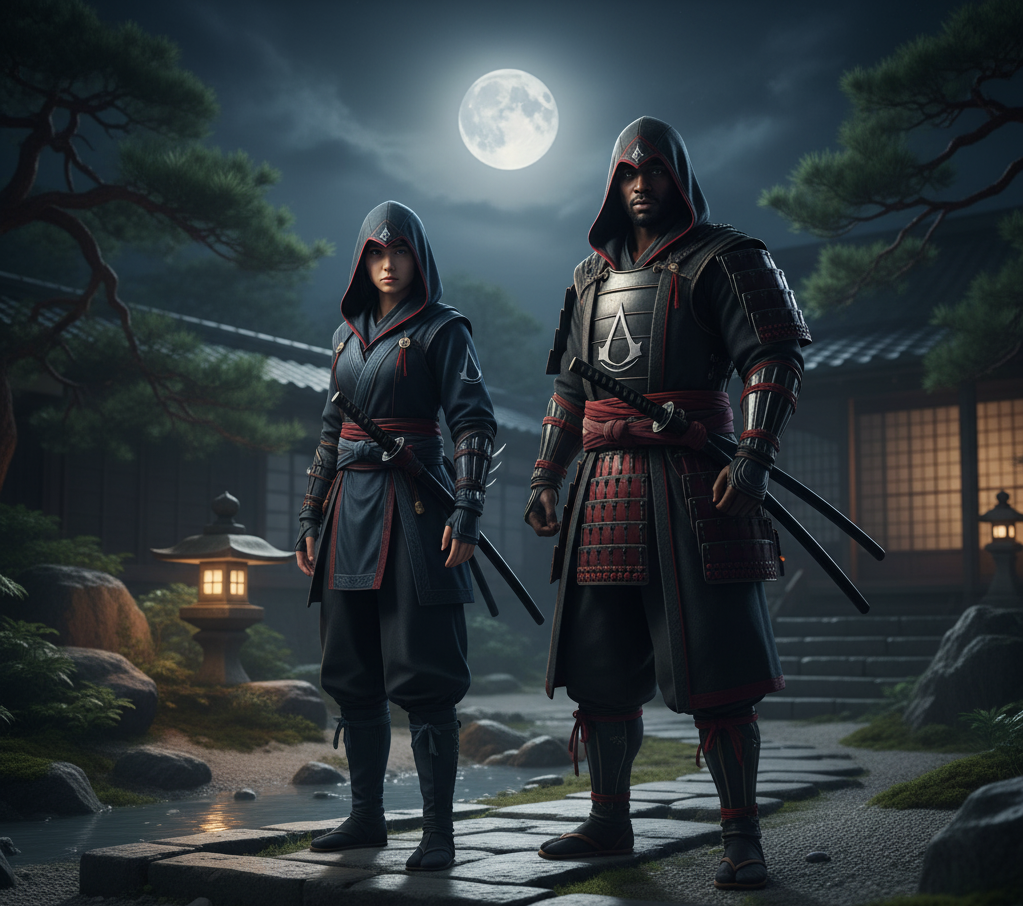
Here’s where Shadows gets interesting. Instead of one protagonist, you get two completely different playstyles wrapped into a single narrative. Naoe, a nimble shinobi trained in stealth and espionage, plays like the classic Assassin’s Creed experience we know and love. Then there’s Yasuke, the towering African samurai whose real historical presence in Japan makes him one of the most fascinating characters Ubisoft has ever created.
And no, this isn’t just a cosmetic choice. These two play fundamentally differently, and the game knows it.
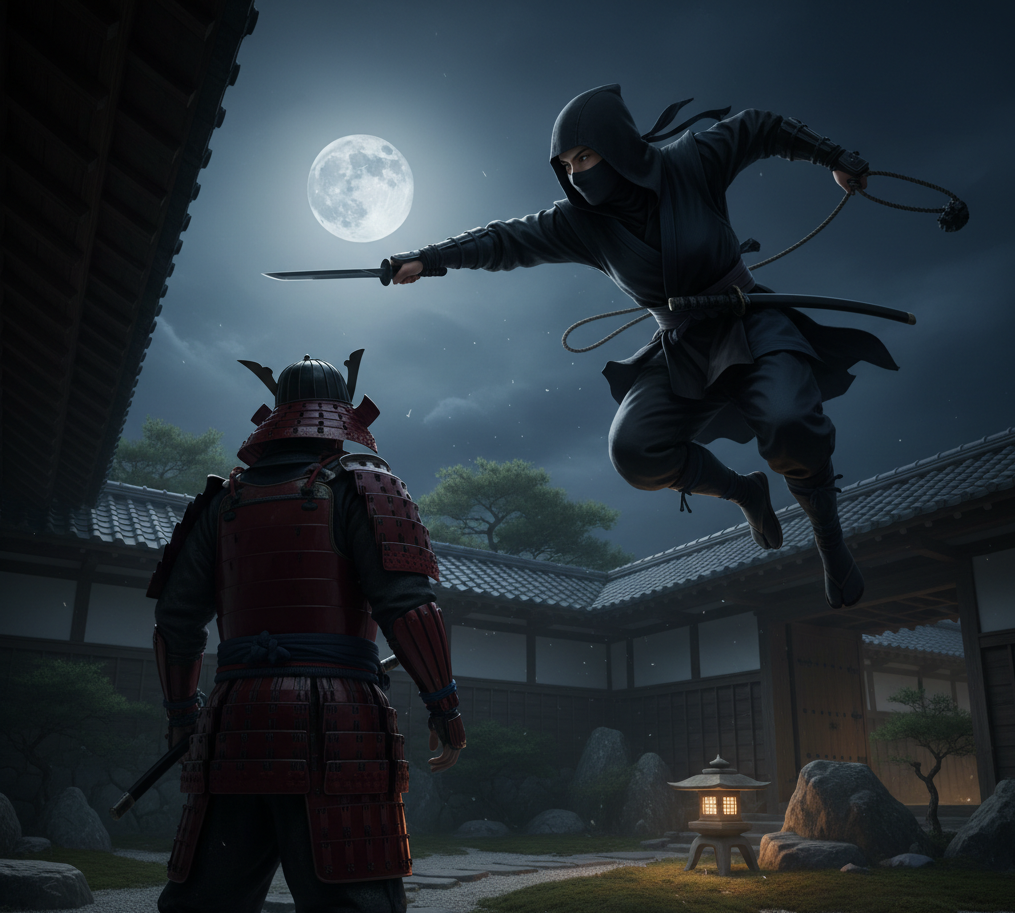
Naoe feels like what Assassin’s Creed was always meant to be. She’s quick, deadly in the shadows, and absolutely useless in direct combat against multiple enemies. Playing as her requires patience, planning, and precise execution. You’ll spend time studying guard patterns, using your grappling hook to reach impossible vantage points, and eliminating targets without anyone knowing you were there.
Yasuke? He’s the complete opposite. This guy is a walking tank who can cleave through enemies like a hot knife through butter. Where Naoe sneaks, Yasuke storms. Where she hides, he stands his ground. The combat system when playing as Yasuke feels closer to Ghost of Tsushima than traditional AC, and honestly? That’s not a bad thing.
How the Switching Mechanic Works
You can swap between characters at designated points in the story or during free roam (except during active missions). The game cleverly uses this system to offer multiple approaches to objectives. Some missions are designed specifically for one character, while others let you choose your approach.
Here’s what makes it work:
- Narrative Justification: The story explains why both characters pursue the same goals
- Unique Skill Trees: Completely separate progression systems for each protagonist
- Environmental Design: Levels accommodate both playstyles with multiple paths
- Complementary Abilities: What one character struggles with, the other excels at
The only downside? Sometimes you’ll be forced to play as one character when you’d prefer the other. A few missions lock you into Yasuke’s brute force approach when a stealth solution would’ve been more satisfying.
Feudal Japan: The Setting We Deserved
A Living, Breathing World
Let me paint you a picture: you’re crouched on a tiled rooftop in Kyoto as cherry blossoms drift past. Below, merchants haggle in the market while samurai patrol the streets. In the distance, Mount Hiei looms through the morning mist. The attention to detail is staggering.
Ubisoft consulted with Japanese historians and cultural experts, and it shows. The architecture feels authentic, from the multi-tiered castles to humble farmhouses. Seasonal changes affect the landscape (yes, those cherry blossoms eventually fall), and different regions have distinct atmospheres. The rural countryside feels vastly different from bustling urban centers.
But here’s what really impressed me: the random encounters. You’ll stumble upon traveling monks, witness duels between ronin, and interrupt bandit ambushes on traders. These moments aren’t marked on your map with glowing icons. They just… happen. It makes exploration feel organic rather than checkbox-ticking.
Historical Accuracy vs. Creative Liberty
Ubisoft walks a tightrope here. The game is set during the late Sengoku period (around 1579), a time of intense conflict and political intrigue. Real historical figures appear, and major events align with documented history. However, this is still an Assassin’s Creed game, so expect the Templar vs. Assassin conflict woven throughout.
History buffs will appreciate the codex entries that separate fact from fiction. The game clearly labels when it’s taking creative liberties, which shows respect for the source material while maintaining the AC narrative framework.
Stealth and Combat: Two Sides of the Same Coin
Stealth Mechanics (Naoe)
Playing as Naoe feels like Ubisoft remembered what made the original Assassin’s Creed games special. The social stealth is back and improved. You can:
- Blend into crowds during festivals
- Hide in tall grass and rice paddies
- Use darkness as actual cover (light and shadow matter now)
- Employ distractions like firecrackers and wind chimes
- Utilize your grappling hook for vertical navigation
The AI is smarter too. Guards investigate disturbances realistically, search in patterns, and actually communicate with each other. Get spotted, and they’ll attempt to track you, check hiding spots, and call for reinforcements. You can’t just hide in a bush and wait 30 seconds for them to forget you exist anymore.
Combat System (Yasuke)
Yasuke’s combat borrows heavily from Ghost of Tsushima’s stance system, and I mean that as a compliment. Different stances work better against specific enemy types:
| Stance | Best Against | Weakness |
|---|---|---|
| Stone Stance | Sword-wielding samurai | Slow, vulnerable to fast attacks |
| Water Stance | Shield-bearing enemies | Limited crowd control |
| Wind Stance | Spear users | Requires precise timing |
| Fire Stance | Multiple enemies | Drains stamina quickly |
The parry system is generous but not forgiving. You’ll need to learn enemy attack patterns, especially against mini-bosses and duel encounters. Button mashing gets you killed fast on higher difficulties.
One complaint: the camera struggles during fights in tight spaces. Indoor combat can become disorienting when the camera clips through walls or gets stuck in corners.
Progression and RPG Elements
Skill Trees That Actually Matter
Both characters have extensive skill trees divided into categories: Combat, Stealth, and Exploration. Unlike some AC games where skill points feel meaningless, the abilities here genuinely change how you play.
Naoe’s tree focuses on:
- Advanced assassination techniques
- Tool upgrades (poison darts, smoke bombs)
- Movement abilities (double jumps, faster climbing)
- Detection avoidance perks
Yasuke’s tree emphasizes:
- Devastating combat abilities
- Defense and armor upgrades
- Battlefield control techniques
- Leadership skills for allied NPCs
You earn skill points through main missions, side quests, and exploration. The pacing feels balanced. I never felt overpowered too early, nor did I struggle unnecessarily due to lack of abilities.
Gear and Customization
Weapons and armor come in tiers: Common, Rare, Epic, and Legendary. Each piece has stats affecting damage, defense, stealth, and special perks. You can upgrade gear using materials found throughout the world.
The transmog system deserves praise. Wear the stats you need while looking however you want. Fashion souls players, rejoice.
Weapon variety is solid. Naoe wields kunai, kusarigama, and various short blades. Yasuke uses katana, nodachi, tetsubo (war clubs), and more. Each weapon type has unique move sets, making experimentation worthwhile.
Mission Design: Hits and Misses
The Good
Main story missions showcase excellent design. You’ll infiltrate heavily guarded castles, participate in large-scale battles, conduct investigations in urban areas, and experience cinematic set pieces that rival any action movie.
One standout mission has Naoe infiltrating a fortress during a thunderstorm. The rain masks your footsteps, but lightning flashes reveal your position. It’s tense, atmospheric, and brilliantly executed.
Side content varies in quality but includes genuinely interesting storylines. The “Tales of…” side quests tell personal stories about regular people affected by the war. Not every side mission involves assassination or combat, which is refreshing.
The Not-So-Good
Despite improvements, some classic Ubisoft issues persist:
- Tailing Missions: They’re still here, and they’re still tedious
- Repetitive Activities: Collecting 50 shrine offerings gets old fast
- Formulaic Bases: Enemy camps follow similar layouts after a while
- Padding: The game could lose 10 hours and be tighter for it
The pacing sags in the middle. After the explosive opening and before the climactic finale, there’s a chunk of gameplay that feels like filler. You’re essentially doing busywork to pad playtime.
Performance on PS5 and Xbox Series X
Technical Performance
I tested Shadows primarily on PS5, with some time on Xbox Series X for comparison. Here’s what you need to know:
PS5 Performance:
- Quality Mode: Native 4K at 30fps with ray tracing
- Performance Mode: Dynamic 1440p-1800p at 60fps
- Activity Cards and DualSense features enhance immersion
- Load times are impressively quick (10-15 seconds)
Xbox Series X Performance:
- Nearly identical to PS5 in both modes
- Slightly faster load times with Quick Resume
- No exclusive features beyond standard Xbox functionality
Both versions look stunning. The ray tracing in Quality Mode adds beautiful reflections on water and armor, but I recommend Performance Mode. The 60fps makes combat and parkour significantly smoother.
Minor bugs exist. I experienced a few crashes (three in 40 hours), occasional texture pop-in, and rare AI pathfinding glitches. Nothing game-breaking, but noticeable. Day-one patches will likely address some issues.
Visual Presentation
The art direction deserves every award it’ll inevitably win. Lighting during golden hour makes you stop and admire the view. Weather effects (rain, snow, fog) dramatically change the atmosphere. Character models are detailed, especially during cutscenes.
The photo mode is robust with tons of filters, frames, and adjustment options. If you’re into virtual photography, you’ll spend hours here.
Story and Characters: Worth Your Investment?
Without spoiling anything: the narrative is stronger than recent AC entries. The story explores themes of identity, belonging, and the cost of revenge. Both protagonists have clear motivations and satisfying character arcs.
Naoe’s storyline focuses on her clan’s destruction and her quest for vengeance. It’s personal, emotional, and well-written. Yasuke’s journey tackles his outsider status in Japanese society and his search for purpose beyond being a weapon. The historical context adds weight to his struggles.
Supporting characters are memorable. Your allies feel like actual people rather than quest dispensers. Villains have understandable motivations, even when their methods are despicable.
Voice acting is excellent across the board. You can play with English or Japanese audio (with subtitles). I recommend Japanese for authenticity, but the English cast does solid work.
The Verdict: Should You Buy Assassin’s Creed Shadows?
After spending significant time in feudal Japan, here’s my honest assessment:
You should buy Assassin’s Creed Shadows if:
- You’ve been waiting for the Japan setting (it delivers)
- You enjoy both stealth and action gameplay
- Strong narratives and character development matter to you
- You loved Ghost of Tsushima and want more samurai action
- You’re invested in the AC lore and modern-day storyline
You should skip or wait if:
- You’re burned out on Ubisoft’s open-world formula
- Repetitive side content frustrates you
- You prefer pure stealth over combat variety
- You’re on a tight budget (wait for a sale)
- You haven’t enjoyed recent AC games (this won’t convert you)
This is the best Assassin’s Creed game since Origins, maybe even Black Flag. The dual protagonist system works brilliantly, feudal Japan is gorgeous, and when the game fires on all cylinders, it’s genuinely special. But it’s still an Ubisoft game with all that entails: bloat, repetition, and occasional technical hiccups.
Conclusion
Assassin’s Creed Shadows is a triumphant entry that delivers on the promise of feudal Japan while refining the formula that’s made the franchise successful for nearly two decades. The dual protagonist system provides genuine variety, the world is meticulously crafted, and the core gameplay loop remains satisfying despite familiar flaws.
Is it perfect? No. The pacing could be tighter, some missions feel recycled, and technical issues occasionally break immersion. But when you’re crouched on a rooftop watching snow fall on ancient Kyoto, or standing toe-to-toe with enemy samurai as Yasuke, these complaints fade into the background.
For longtime fans wondering if Ubisoft can still innovate within the AC framework, Shadows provides a confident answer. For newcomers curious about the franchise, this is an excellent entry point with a self-contained story.
My recommendation? If you’ve got a PS5 or Xbox Series X and enjoy action-adventure games, Assassin’s Creed Shadows deserves a spot in your collection. Just maybe wait for that first major patch before diving in.
Have you played Assassin’s Creed Shadows yet? Which protagonist do you prefer, and what’s your take on the feudal Japan setting? Let me know in the comments below. I’m genuinely curious if your experience matches mine, especially regarding the combat balance.
FAQ: Assassin’s Creed Shadows Common Questions
How long is Assassin’s Creed Shadows?
The main story takes approximately 30-35 hours to complete. If you pursue side quests, collectibles, and exploration, expect 60-80 hours for full completion. Focusing solely on critical path missions can reduce playtime to around 25 hours, but you’ll miss significant character development and world-building.
Is Assassin’s Creed Shadows historically accurate?
Shadows blends historical accuracy with creative fiction. The setting, major events, and many characters are based on documented history from Japan’s Sengoku period. However, the Assassin vs. Templar conflict is fictional, and some events are dramatized for gameplay purposes. The game includes a codex that separates historical fact from creative interpretation.
Can you play as both characters throughout the game?
Yes, you can switch between Naoe and Yasuke during free roam and at specific story points. Some missions are character-specific and lock you into one protagonist, but the majority of content allows you to choose your preferred playstyle. Each character has separate progression and skill trees.
Is Assassin’s Creed Shadows better on PS5 or Xbox Series X?
Both versions perform nearly identically. PS5 offers DualSense haptic feedback and adaptive triggers that enhance immersion, plus useful Activity Cards for quick mission access. Xbox Series X has slightly faster load times with Quick Resume. Choose based on your preferred ecosystem and controller preference.
Does Assassin’s Creed Shadows have multiplayer or co-op?
No, Shadows is a purely single-player experience. There’s no multiplayer component, co-op mode, or online features beyond cloud saves and potential future DLC content. The game focuses entirely on the narrative-driven campaign and exploration.
Sources & Additional Resources
- Ubisoft Official Website – Assassin’s Creed Shadows Details – Official game information, updates, and patch notes
- Digital Foundry – Technical analysis and performance comparisons across PS5 and Xbox Series X platforms