
I took an arrow to the knee. There, I said it. Got the meme out of the way early. But here’s the thing: that overused joke represents exactly why we’re still talking about Skyrim 14 years after release. This game embedded itself so deeply into gaming culture that its references became universal language.
November 11, 2011. I remember skipping class to play Skyrim on launch day, emerging from Helgen’s caves into that breathtaking mountain vista, and genuinely believing I’d never need another game. Fast forward to 2025, and here I am, installing it for probably the 50th time, wondering if the magic still exists or if nostalgia has clouded my judgment.
Skyrim in 2025 is a fascinating case study. It’s been released on literally everything that can run software. The modding community has essentially rebuilt the game from scratch multiple times. Bethesda has re-released it so many times that jokes about “Skyrim on your smart fridge” became reality. But beneath the memes and re-releases, a genuine question exists: does the game actually hold up, or are we collectively experiencing Stockholm syndrome with a dated RPG?
I’ve spent the last month diving back into Skyrim, both vanilla and heavily modded, to give you the real answer. Spoiler: it’s complicated, sometimes frustrating, occasionally magical, and absolutely worth discussing.
The World That Refuses to Die
Why Skyrim’s Map Still Captivates
Let me be clear: Skyrim’s map is not large by 2025 standards. Modern open-world games dwarf it in square mileage. Yet somehow, Skyrim’s relatively compact world feels more memorable than sprawling maps three times its size.
The secret is density and variety. Within a few minutes of walking, you transition from snowy tundra to dense forests, from volcanic hot springs to frozen coastlines. Every location feels handcrafted rather than procedurally generated. That random cave you stumbled into? It has environmental storytelling, unique loot, and often connects to a broader quest you haven’t discovered yet.
What makes Skyrim’s world work:
- Verticality: Mountains aren’t just backdrops, they’re climbable terrain with rewards for exploration
- Environmental storytelling: Skeletons tell stories, notes reveal tragedies, arrangements hint at what happened
- Discovery incentives: Exploring off the beaten path consistently rewards curiosity
- Landmark visibility: You can see interesting locations from distance, naturally guiding exploration
- Varied biomes: Each hold has distinct climate, architecture, and atmosphere
The cities, while small by realistic standards, have personality. Whiterun’s central location and accessibility make it feel like home. Solitude’s imposing architecture conveys imperial power. Riften’s corruption oozes from every corner. Windhelm’s racism toward dark elves isn’t subtle, making player choices feel weighted.
Compare this to modern games with massive but empty maps. Skyrim proves that thoughtful design beats pure scale every time.
The Nordic Aesthetic Endures
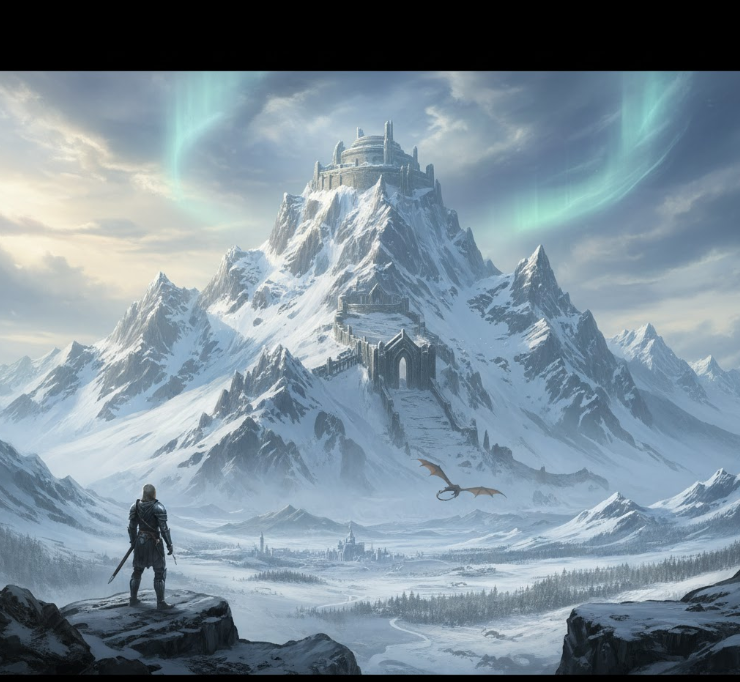
The art direction remains Skyrim’s greatest strength. The Nordic-inspired architecture, rugged landscapes, and harsh weather create an identity that’s instantly recognizable. You could show someone a random screenshot, and they’d know it’s Skyrim within seconds.
The color palette of grays, whites, and muted earth tones might seem drab compared to more vibrant games, but it reinforces the harsh northern setting. When you encounter the autumn forests of the Rift or the volcanic tundra near Windhelm, the contrast hits harder because the baseline is so stark.
Sure, the graphics look dated in 2025. Character models are stiff, textures are low-resolution, and animations are… well, we’ll get to that. But the artistic vision transcends technical limitations. Skyrim doesn’t try to be photorealistic. It aims for atmospheric, and nails it.
The Gameplay Loop: Timeless or Tired?
Combat Still Feels Clunky
Let’s address the elephant mammoth in the room: Skyrim’s combat has always been its weakest element, and 14 years hasn’t improved it. The melee combat amounts to backpedaling while swinging wildly or shield-bashing enemies into stunlock submission. Magic feels powerful at first but scales poorly into late game. Archery remains the most satisfying option, which says everything about the sword-and-sorcery combat.
What hasn’t aged well:
- Floaty hit detection: Weapons lack weight and impact feedback
- Brain-dead AI: Enemies run directly at you with minimal tactics
- Animation jank: The third-person combat looks ridiculous
- Kill-cam interruptions: Cinematic kills break combat flow
- Difficulty scaling: Higher difficulties just make enemies damage sponges
Compare Skyrim’s combat to modern action RPGs like Elden Ring, God of War, or even Bethesda’s own Starfield, and it feels primitive. Button mashing wins most fights. Positioning matters less than leveling and gear. Boss fights are just regular enemies with more health.
The magic system has aged slightly better. Combining spells in each hand creates interesting synergies. Summoning conjurations or raising undead provides tactical options. But mages struggle in late game without heavy investment in enchanting and alchemy.
Character Building Remains Excellent
Here’s where Skyrim shines: the freedom to build any character you imagine. Want to be a heavy-armor-wearing mage who dual-wields swords? Go for it. Sneaky archer who dabbles in necromancy? Absolutely. The perk system, while simpler than Morrowind or Oblivion’s systems, provides enough customization to support varied playstyles.
The leveling system’s biggest strength is its organic nature. You improve skills by using them. Want better lockpicking? Pick locks. Need more health? Fight things. This creates natural progression that encourages experimentation rather than min-maxing from the start.
The skill trees offer genuine variety:
| Playstyle | Viable Skills | Late-Game Power |
|---|---|---|
| Stealth Archer | Sneak, Archery, Light Armor | Overpowered (as always) |
| Two-Handed Warrior | Two-Handed, Heavy Armor, Smithing | Strong but straightforward |
| Mage | Destruction, Conjuration, Restoration | Scales poorly without cheese |
| Spellsword | One-Handed, Destruction, Enchanting | Balanced and flexible |
| Illusion Assassin | Illusion, Sneak, One-Handed | Creative and satisfying |
The crafting loop of smithing, enchanting, and alchemy creates a compelling endgame progression. Hunting for materials, learning enchantments, and brewing potions provides goals beyond just completing quests. The feedback loop of improving gear, becoming stronger, and tackling harder content remains addictive.
Exploration Is Still King
This is where Skyrim truly holds up in 2025. The exploration loop of wandering, discovering something interesting, getting sidetracked, and emerging hours later having forgotten your original objective remains unmatched.
The quest design supports this beautifully. You’re rarely sent across the entire map for a single objective. Quests cluster geographically, so pursuing one naturally leads to discovering others. The radiant quest system, while criticized for repetition, keeps you exploring new locations rather than revisiting the same dungeons.
Dungeon design deserves special mention. Each dungeon type (Nordic ruins, dwemer ruins, caves, forts) has distinct aesthetics and mechanics. Most importantly, they include shortcuts back to the entrance, showing Bethesda understands players don’t want to backtrack through cleared content.
Random encounters add life to the world. Traveling merchants, wild animal attacks, vampire ambushes, and bandit ambushes create the illusion of a living world. You’re never quite sure what you’ll encounter on the road to Riften.
The Story and Quests: A Mixed Bag
The Main Quest Is Just Okay
Let’s be honest: the main storyline about Alduin the World-Eater destroying the world is the least interesting part of Skyrim. You’re the Dragonborn, destined to stop the dragon apocalypse, but the story never makes this feel urgent or compelling.
The main quest serves as a decent tutorial for game mechanics and unlocks useful shouts, but most players abandon it for more interesting content. The Civil War questline, while more engaging politically, suffers from repetitive siege battles and limited consequences regardless of which side you choose.
Where Skyrim shines is the faction questlines and side quests:
The Dark Brotherhood: A genuinely dark storyline about assassins with memorable characters and shocking twists. This questline alone justifies playing Skyrim.
The Thieves Guild: Restoring the guild to its former glory while uncovering supernatural conspiracy provides satisfying progression and story beats.
The College of Winterhold: The shortest major questline, but it tackles interesting themes about magical power and responsibility. Feels rushed but has great moments.
The Companions: A straightforward warrior guild with werewolf elements. Not groundbreaking but solid meat-and-potatoes fantasy storytelling.
The side quests often outshine major storylines. “A Night to Remember” with Sam Guevenne remains hilarious. “The Mind of Madness” explores Sheogorath’s realm in creative ways. Small quests like helping townspeople or investigating mysteries often have more heart than grand epic narratives.
Player Choice Is Mostly Illusion
Here’s where Skyrim shows its age compared to modern RPGs. Your choices rarely matter beyond immediate quest outcomes. You can lead every faction simultaneously with no conflict. The game lets you become Archmage after casting maybe 10 spells total. Roleplaying is self-imposed rather than mechanically reinforced.
Compare this to games like Baldur’s Gate 3, Cyberpunk 2077, or even Fallout New Vegas, and Skyrim’s lack of meaningful choice becomes apparent. You’re funneled toward similar outcomes regardless of how you play. The world doesn’t react to your status as guild leader, thane of every hold, or literal Dragonborn in meaningful ways.
That said, the freedom to ignore questlines entirely and create your own narrative through gameplay is powerful. You can spend 200 hours never touching the main quest, just living as a hunter, merchant, or adventurer. That emergent storytelling through sandbox gameplay is something Skyrim still does better than most.
The Modding Miracle
How Mods Transform Everything
Here’s the truth: discussing Skyrim in 2025 without addressing mods is pointless. The modding community has essentially created dozens of alternate versions of Skyrim, each catering to different preferences. Without mods, Skyrim feels dated. With mods, it rivals modern releases.
Essential mod categories for 2025:
Graphics Overhauls:
- ENB presets for photorealistic lighting
- Texture replacements for 4K/8K visuals
- Mesh improvements for character models
- Weather and climate overhauls
- Vegetation and landscape enhancements
Gameplay Improvements:
- Combat overhauls (Wildcat, Ultimate Combat)
- Perk expansions (Ordinator, Vokrii)
- Survival mechanics (Frostfall, Campfire)
- Enemy AI improvements
- Magic system overhauls (Apocalypse, Mysticism)
Content Additions:
- Massive quest mods (Falskaar, Beyond Skyrim)
- New lands and dungeons
- Additional followers with full dialogue
- New weapons, armor, and items
- Player homes and settlement building
Quality of Life:
- UI improvements (SkyUI is essential)
- Bug fixes Bethesda never addressed
- Better inventory management
- Map markers and quest tracking
- Immersion mods (needs, diseases, consequences)
The mod collections like Wabbajack make installation easier than ever. You can download curated mod lists (hundreds of mods) and install them with one click, transforming Skyrim into something nearly unrecognizable from the base game.
The Community Keeps It Alive
The Skyrim modding community in 2025 is still thriving. New mods release daily. Major projects like Beyond Skyrim continue development, promising to add entire provinces beyond Skyrim’s borders. The Anniversary Edition’s Creation Club content, while controversial, provides official mod support.
Some mods are so comprehensive they’re essentially separate games. Enderal: Forgotten Stories is a total conversion with an entirely new world, story, and mechanics. Legacy of the Dragonborn turns Skyrim into a museum collector’s dream. Requiem transforms it into a hardcore RPG with brutal difficulty and realistic consequences.
This is Skyrim’s secret to longevity. The base game provides a framework, and the community builds infinite variations on that foundation. You can play a horror version, a hardcore survival simulator, a lighthearted adventure, or a dark souls difficulty experience, all within the same engine.
Performance and Technical State
How Does It Run in 2025?
The base game runs on literally anything. Modern PCs handle Skyrim at maximum settings while barely using resources. Even budget laptops can run it smoothly. The Switch version proves it runs on mobile hardware. Bethesda optimized this game extensively over multiple re-releases.
The Anniversary Edition added minor visual improvements and bundled Creation Club content, but it’s not a dramatic upgrade. The Special Edition from 2016 remains the sweet spot, offering 64-bit stability while being more mod-friendly than Anniversary Edition.
Platform recommendations:
PC: The definitive version. Mod support, performance, and flexibility make this the clear choice.
Xbox Series X/S: Supports mods (limited compared to PC). Performance mode runs smoothly. Good alternative if PC isn’t available.
PlayStation 5: Also supports mods, but Sony’s restrictions limit options. Still playable and looks decent.
Nintendo Switch: Portable Skyrim is cool, but it’s the worst-performing version with no mod support. Only if portability is essential.
The game’s age means loading times are nearly instant on modern SSDs. Even entering buildings takes seconds rather than the minute-long loads of 2011. Fast travel is instantaneous. The technical friction that plagued the original release is gone.
The Bugs Are Features Now
Look, this is a Bethesda game. Bugs exist. Giants still launch you into orbit with their clubs. Physics freak out occasionally. NPCs walk into walls. Quest triggers sometimes break. But compared to launch, Skyrim is remarkably stable now.
The unofficial patches fix hundreds of bugs Bethesda never addressed. Most game-breaking issues are resolved. The remaining bugs are mostly harmless quirks that have become part of Skyrim’s identity. The physics going haywire isn’t a problem, it’s entertainment.
What Modern Games Do Better
Where Skyrim Shows Its Age
Despite its strengths, Skyrim can’t compete with modern RPGs in several areas:
Voice Acting and Dialogue: The limited voice actors mean you hear the same voices constantly. Dialogue trees are shallow compared to games like Baldur’s Gate 3 or The Witcher 3. Characters lack depth beyond their basic functions.
Animation Quality: Everything is stiff. Walking, running, combat, conversations with floating NPCs staring directly at you. Modern motion capture makes Skyrim look robotic.
Facial Expressions: Characters have maybe three facial expressions total. Emotional scenes lack impact because everyone has dead eyes and minimal face movement.
Quest Design Complexity: Most quests follow “go to location, kill things, return” patterns. Compare this to The Witcher 3’s intricate investigations or Baldur’s Gate 3’s multiple solutions, and Skyrim feels simplistic.
NPC Schedules and AI: While impressive in 2011, NPC routines feel basic now. Characters stand in the same spot all day, repeat the same lines, and react minimally to player actions.
Combat Depth: We covered this earlier, but it bears repeating. Almost every modern RPG has more engaging, tactical, and satisfying combat.
Learning From Its Successors
Games that came after Skyrim learned from its successes and failures:
The Witcher 3 took Skyrim’s exploration but added complex narratives and meaningful choices. Every quest feels hand-crafted rather than radiant.
Elden Ring combined open-world exploration with challenging combat and environmental storytelling, showing you can have both difficulty and freedom.
Baldur’s Gate 3 demonstrated that deep roleplay mechanics and branching narratives can exist in 3D open worlds.
Breath of the Wild refined the “see that mountain, climb it” philosophy with better traversal mechanics and emergent gameplay.
Ironically, Bethesda’s own Fallout 4 and Starfield show they learned some lessons (better shooting, settlement building) while forgetting others (reduced roleplay depth, weaker writing).
The Nostalgia Factor
Are We Remembering It Better Than It Was?
This is the uncomfortable question every returning player must confront: is Skyrim actually good, or do we just remember it fondly?
I think the answer is both. Skyrim was genuinely groundbreaking in 2011. The sense of freedom, exploration, and possibility was unlike anything most players had experienced. For many, it was their first true open-world RPG. That initial magic is real and worth celebrating.
But nostalgia definitely colors perception. Going back reveals clunky combat we tolerated, repetitive quests we overlooked, and technical limitations we forgave because nothing better existed. The game we remember isn’t quite the game that actually exists.
The reality is nuanced:
- The exploration and world design remain excellent
- The combat was always weak, we just accepted it
- The modding potential exceeded the base game quality
- The freedom of choice in playstyle (not story) holds up
- The atmosphere and aesthetic design transcend graphics quality
Skyrim is like comfort food. It’s not haute cuisine, but it satisfies in ways that polished modern games sometimes don’t. There’s value in that familiar, cozy experience even when you recognize the flaws.
Who Should Play Skyrim in 2025?
The Honest Recommendation
After extensive time revisiting Skyrim in 2025, here’s who will genuinely enjoy it:
You should absolutely play Skyrim if:
- You never experienced it and want to understand its cultural impact
- You love exploration-focused open-world games
- Modding interests you (PC especially)
- You prefer player freedom over scripted narratives
- You enjoy RPG character building and crafting loops
- You have nostalgia for it and want a comfort game
- You’re okay with dated combat for everything else it offers
You should probably skip if:
- Combat quality is your top priority
- You need cutting-edge graphics to enjoy games
- You prefer linear, story-driven experiences
- You’ve played better open-world RPGs recently and can’t adjust
- You don’t want to deal with mods on PC (console versions are limiting)
- You need constant validation through quest markers and handholding
- You’re looking for deep roleplay with meaningful choice consequences
For returning players, Skyrim offers comfort food gaming. You know exactly what you’re getting, and there’s value in revisiting a familiar world. For new players, manage expectations. This is a game best understood in historical context.
Insert image of Skyrim’s northern lights over snowy landscape here
The Special Edition vs Anniversary Edition Debate
Which Version Should You Buy?
In 2025, you have options for buying Skyrim, and choosing correctly matters:
Special Edition (2016):
- More stable for heavy modding
- Cheaper (frequently on sale for under $20)
- Doesn’t include Creation Club content
- Better long-term choice for serious mod users
- All essential improvements from original
Anniversary Edition (2021):
- Includes all Creation Club content (fishing, survival mode, new quests)
- Some mods break with Anniversary Edition
- More expensive ($50+ unless on sale)
- Better for console players or those wanting official content
- Can be upgraded from Special Edition
My recommendation: Get Special Edition on sale, then decide if you want Anniversary upgrade later. The Creation Club content isn’t essential, and Special Edition’s modding stability outweighs Anniversary bonuses.
For console players, Anniversary Edition makes more sense since modding is limited anyway. The extra official content adds value when you can’t access community mods freely.
The Competition in 2025
How Skyrim Stacks Up Against Current RPGs
Let’s address the elephant in the room: dozens of excellent RPGs have released since 2011. How does Skyrim compare?
Against Baldur’s Gate 3: BG3 destroys Skyrim in storytelling, choice consequences, and tactical combat. But Skyrim offers better first-person immersion and exploration freedom.
Against Elden Ring: Elden Ring has superior combat, boss design, and challenge. Skyrim wins in accessibility, quest variety, and NPC interactions.
Against Cyberpunk 2077: Cyberpunk has better writing, graphics, and atmosphere. Skyrim’s fantasy setting and modding scene give it different appeal.
Against The Witcher 3: Witcher 3 has better quests, story, and characters. Skyrim offers more roleplay freedom and player-defined narratives.
Skyrim doesn’t beat modern RPGs at their strengths. But it occupies a unique space as the comfort food fantasy sandbox that lets you roleplay however you want. That niche remains valuable even when flashier games exist.
The Verdict: Does It Hold Up?
After spending a month back in Skyrim, exploring both vanilla and modded versions, here’s my honest conclusion:
As a pure 2025 release compared to modern standards: No, Skyrim doesn’t fully hold up. The combat is weak, graphics are dated, animations are stiff, and quest design feels basic compared to current RPGs.
As a playable, enjoyable game you can sink hundreds of hours into: Absolutely yes. The core exploration loop, world design, and freedom remain engaging. With mods, it can look and play like a modern game.
As a cultural touchstone and modding platform: It’s irreplaceable. No game has inspired this level of community creativity and longevity. The framework Bethesda created allows infinite variation.
The truth is Skyrim holds up where it always excelled (exploration, atmosphere, freedom) and struggles where it always struggled (combat, consequences, polish). Time hasn’t changed its fundamental nature. What’s changed is the surrounding landscape of better RPGs exposing its weaknesses while also highlighting what it still does uniquely well.
Conclusion
Skyrim in 2025 is a paradox. It’s simultaneously a dated relic from 2011 and a constantly evolving platform that feels fresh through mods. It’s comfort food that satisfies despite recognizing its flaws. It’s a game that matters more for what it represents than what it mechanically achieves.
Should you play it in 2025? That depends entirely on what you value. If you want cutting-edge combat, polished systems, and meaningful narrative choices, dozens of better options exist. If you want to wander a beautifully crafted fantasy world at your own pace, creating emergent stories through exploration and experimentation, Skyrim still delivers that experience better than almost anything else.
The modding scene ensures Skyrim will remain relevant for years to come. When the community can transform a 14-year-old game into something that looks and plays modern, the base game’s age becomes less relevant. You’re not playing 2011 Skyrim anymore. You’re playing the community’s evolving vision of what Skyrim could be.
My final take: Skyrim holds up not despite its age, but because its core design philosophy of player freedom and exploration transcends technical limitations. It’s not the best RPG you can play in 2025, but it might be the most comfortable, familiar, and endlessly moddable. And for millions of players, that’s exactly what they want.
Have you returned to Skyrim recently, or are you considering your first playthrough in 2025? What mods do you consider essential, and do you think the base game still works without them? I’m genuinely curious if newer players can appreciate what made Skyrim special, or if it requires nostalgia to overlook the rough edges. Share your thoughts below.
FAQ: Skyrim in 2025
Is Skyrim worth playing for the first time in 2025?
Yes, with caveats. Skyrim offers excellent exploration and world design that holds up well. However, expect dated combat, graphics, and animations. New players should heavily mod the PC version or accept limitations on console. If you enjoy open-world fantasy RPGs and can overlook technical age, Skyrim provides 100+ hours of content and remains culturally significant.
What’s the difference between Special Edition and Anniversary Edition?
Special Edition (2016) is the remastered 64-bit version with improved graphics and stability. Anniversary Edition (2021) includes all Creation Club content (500+ items, quests, fishing, survival mode). Special Edition is better for heavy modding and cheaper. Anniversary Edition suits console players or those wanting official content without mods. Both run identically performance-wise.
How many mods should I install for first playthrough?
For first-time players, start with 20-30 essential mods: SkyUI (mandatory), Unofficial Patch, graphics improvements, and quality-of-life tweaks. Avoid major gameplay overhauls until you understand vanilla mechanics. Use curated mod lists like Wabbajack for easy installation. Experienced players can handle 200+ mods, but start conservative to avoid technical issues.
Can you play Skyrim on modern consoles?
Yes, Skyrim runs excellently on PS5, Xbox Series X/S, and Switch. Current-gen consoles offer 60fps performance modes and faster loading. Xbox has better mod support than PlayStation due to Sony’s restrictions. Switch version is portable but graphically inferior with no mods. PC remains the best platform for performance and modding freedom.
How long does it take to beat Skyrim?
Main story: 25-30 hours. Main story plus major faction quests: 60-80 hours. Completionist run with all quests and locations: 200+ hours. Most players never “finish” Skyrim, as exploration and side content provide endless gameplay. Modding extends this infinitely. Expect 100+ hours for a thorough first playthrough exploring everything.
Sources & Additional Resources
- Nexus Mods Skyrim – Skyrim Modding Database – Comprehensive mod collection and community resources
- r/SkyrimMods Reddit Community – Active community for troubleshooting, recommendations, and modding guides
- Unofficial Elder Scrolls Pages (UESP) – Complete wiki with quest guides, mechanics explanations, and lore information