
You know that feeling when you stumble upon a game nobody’s talking about, and it completely blows your mind? That happened to me three times already this year, and we’re only in October. While everyone was busy arguing about which AAA game disappointed them most, the indie scene quietly delivered some of the most innovative, heartfelt, and just plain fun experiences gaming has seen in years.
Here’s the thing about indie games in 2025: they’re not just “budget alternatives” to big releases anymore. These are carefully crafted experiences that take risks major publishers wouldn’t dare attempt. We’re talking pixel art that’ll make you cry, gameplay mechanics you’ve never seen before, and stories that stick with you long after the credits roll.
I’ve spent the last few months digging through Steam’s depths, scouring the eShop, watching indie showcases, and actually playing these games instead of just wishlisting them. Some became instant favorites. Others surprised me completely. A few made me question why I even bother with $70 AAA releases.
This isn’t your typical “top 10 indie games” list that just regurgitates whatever IGN already covered. These are genuine hidden gems, games flying under the radar that deserve way more attention than they’re getting. Whether you’re on PC with a massive Steam library or rocking a Switch for portable gaming, I’ve got recommendations that’ll scratch itches you didn’t know you had.
Why 2025 Is Special for Indies
The Perfect Storm of Creativity
Something shifted in the indie space this year. Maybe it’s developers finally mastering current-gen tools. Maybe it’s the accessibility of game engines like Unity and Godot. Or maybe creators just stopped caring about following trends and started making weird, passionate projects again.
Whatever the reason, 2025 delivered an embarrassment of riches:
- Genre-blending experiments that actually work instead of feeling gimmicky
- Narrative innovations pushing interactive storytelling forward
- Visual styles ranging from photorealistic pixel art to abstract fever dreams
- Accessibility options showing big studios how it’s done
- Cross-platform releases meaning PC and Switch players get simultaneous launches
The democratization of game development means solo developers and tiny teams are creating experiences that rival studio productions. Tools like Aseprite for pixel art, Blender for 3D, and accessible engines mean the barrier to entry keeps dropping.
But here’s what really matters: these games have soul. You can feel the passion radiating through every pixel, every line of dialogue, every musical note. That’s something no multi-million dollar budget can buy.
Narrative-Driven Experiences
Games That Tell Unforgettable Stories
Echoes of Somewhere (PC, Switch)
This one blindsided me completely. It’s a narrative adventure about memory, identity, and what makes us human. You play as someone waking up in a surreal landscape made of fragmented memories, trying to piece together who you are.
The genius is in the mechanics. Your dialogue choices don’t just affect story branches but literally reshape the world around you. Choose anger, and the environment becomes hostile. Choose compassion, and paths open that were previously blocked. It’s not heavy-handed about it either. The changes feel organic, natural.
The watercolor art style shifts based on your emotional state. Moments of clarity bring sharp, vibrant colors. Confusion creates blurred, muddy visuals. It’s gorgeous and deeply affecting. The soundtrack by an unknown composer (seriously, I can’t find much info about them) perfectly complements every moment.
Why it’s special: Most games tell you a story. This one makes you feel like you’re creating it, even when you’re following a linear path. The illusion of agency here feels more real than actual branching narratives in bigger games.
Playtime: 6-8 hours for one playthrough, but the multiple endings encourage replays.
Price: $19.99
Insert image of Echoes of Somewhere watercolor landscape here
The Last Conductor (PC, Switch)
A narrative puzzle game about a train conductor navigating the final routes before an unnamed apocalypse. Each passenger has a story, a destination, and limited time. You decide who gets where, knowing you can’t save everyone.
The weight of these choices hits differently than typical “moral choice” games. There’s no good or evil meter. Just consequences you live with. An elderly woman wants to reach her daughter before the end. A young musician needs to perform one final concert. A scientist might have information that could help people. You choose.
The minimalist art style (think Thomas Was Alone meets Papers Please) focuses attention on the writing, which is exceptional. Each passenger feels like a real person with hopes, fears, and regrets. The ending sequences depending on your choices range from quietly hopeful to devastating.
Why it’s special: It explores mortality, regret, and compassion without being preachy. The train conductor framing device creates natural time pressure without feeling contrived.
Playtime: 4-5 hours
Price: $14.99
Innovative Gameplay Mechanics
Games That Play Like Nothing Else
Hexbound (PC, Switch)
Imagine if Into the Breach and a deck-builder had a baby, then that baby was raised by roguelikes. Hexbound is a turn-based tactical game where you’re controlling spell cards on a hex grid, fighting increasingly bizarre enemies.
The twist: every action consumes cards from your deck. Move? That’s a card. Attack? Card. Defend? You guessed it. Your deck reshuffles when empty, but certain powerful cards only appear once per shuffle. Managing your deck becomes this intense puzzle where you’re constantly calculating five moves ahead.
The run variety is insane. Different starting decks, modifiers that completely change rules, and unlockable cards that enable wild synergies. I’ve put 40 hours in and still haven’t seen all the possible combinations.
Standout features:
- Runs take 30-45 minutes (perfect for Switch handheld sessions)
- Daily challenges with online leaderboards
- Accessibility options including colorblind modes and turn timers
- “Story mode” with reduced difficulty for players who just want the narrative
- Genuinely funny enemy descriptions and flavor text
Why it’s special: It nails the “one more run” addiction while requiring actual strategic thinking. No braindead grinding here.
Price: $16.99
Reverb (PC)
This is tough to explain without spoiling the core conceit, but I’ll try. Reverb is a first-person puzzle platformer where your past actions create echoes that persist in the environment. Every jump, every button press, every movement creates a ghost version of yourself that repeats those actions on a loop.
You use these echoes to solve increasingly complex puzzles. Need to press two buttons simultaneously? Create an echo that presses one while you press the other. Need to reach a high platform? Stack echoes like stairs. The difficulty ramps beautifully, introducing new mechanics without overwhelming you.
The aesthetic is striking: stark white environments with your echoes appearing as vibrant colors. Each echo is a different hue, so levels with dozens of echoes become these beautiful, chaotic light shows.
Why it’s special: The mechanic feels completely fresh. I’ve played hundreds of puzzle games, and this one made me think in ways I haven’t before. Plus, the later levels where you’re managing 15+ echoes simultaneously create this beautiful chaos that’s somehow still solvable.
Playtime: 8-10 hours for main campaign, additional challenge rooms for masochists
Price: $19.99
Visual Masterpieces
Games That Are Pure Art
Painted Tides (PC, Switch)
Someone decided to make a Metroidvania where every single frame looks like an oil painting, and somehow it runs at 60fps. Painted Tides is a gorgeous exploration game set in a world where reality bleeds into imagination.
You play as an artist who discovers they can paint portals to surreal dimensions. Each area has a distinct artistic style: one level mimics Van Gogh’s swirling brushwork, another channels Dali’s melting surrealism, a third embraces abstract expressionism.
The gameplay is solid Metroidvania fare: exploration, ability gating, backtracking with new powers. But the presentation elevates it. Watching your character move through these living paintings, with brushstrokes animating in the background and colors shifting as you progress, is mesmerizing.
Technical achievement: The game uses a custom shader system that applies painterly effects in real-time. Every screenshot looks like it belongs in a gallery.
Why it’s special: It proves indie games can compete visually with any AAA production through distinct art direction rather than raw technical power.
Playtime: 12-15 hours for 100% completion
Price: $24.99
Glitch Garden (PC, Switch)
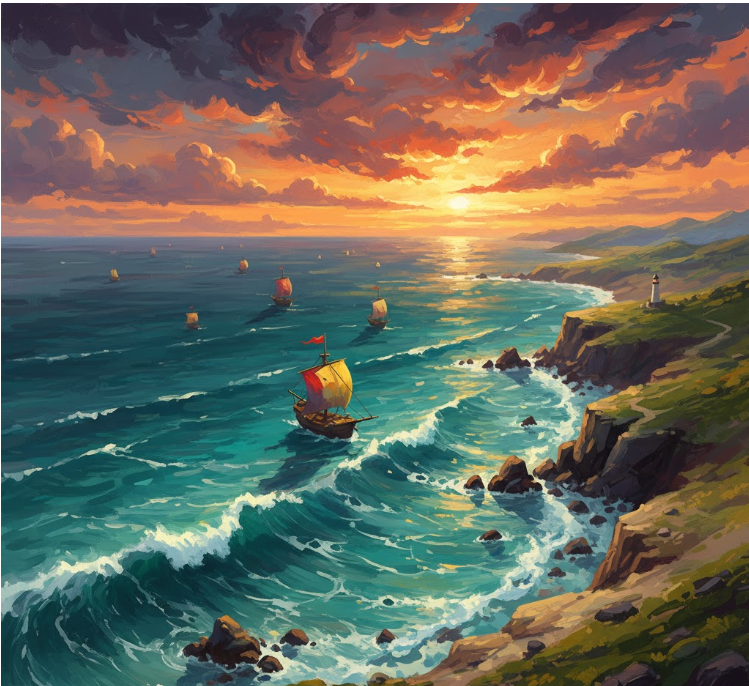
A gardening sim meets puzzle game with a glitchy, lo-fi aesthetic that somehow becomes beautiful. You’re tending a digital garden that exists in corrupted computer memory, leading to weird visual artifacts and reality-bending mechanics.
Plants grow in impossible ways. Flowers bloom in pixel patterns. The UI occasionally “breaks” in ways that are actually part of the puzzle solutions. It’s like playing a game that’s actively falling apart, except it’s all intentional and deeply clever.
The chill vibes and satisfying plant-growing loop make this perfect for unwinding after stressful days. There’s no fail state, no time pressure, just you and your weird digital garden. The procedural music system generates ambient soundscapes based on what you’re growing, creating a unique soundtrack for each player.
Why it’s special: It takes the “cozy game” trend and adds just enough weirdness to keep it interesting. Plus, the glitch aesthetic is genuinely innovative rather than just being trendy.
Playtime: Endless, but main “storyline” takes 10-12 hours
Price: $14.99
Co-op and Multiplayer Gems
Games Better With Friends
Tiny Kingdoms (PC, Switch)
A 2-4 player cooperative city builder where each player controls a different aspect of a growing kingdom. One player handles resources, another manages defense, someone else handles citizen happiness, and the fourth manages expansion.
The catch: you can’t directly see what the others are doing in real-time. You get periodic updates and can communicate, but information is limited. This creates hilarious chaos as players frantically try to coordinate without full information.
Runs last 45 minutes to an hour, making it perfect for game nights. The cartoonish art style and lighthearted tone keep things fun even when your kingdom collapses because nobody realized the food supply was running out.
Why it’s special: Most co-op games are just single-player games with another person shooting stuff. This one requires actual coordination and communication. It’s basically Overcooked but for strategy gamers.
Price: $19.99
Spectral Shift (PC)
An asymmetric multiplayer game (1v3) where one player is a ghost haunting a mansion, and three others are paranormal investigators trying to identify and banish it. Think Dead by Daylight meets Phasmophobia, but more accessible and way less scary.
The ghost player has limited powers early but grows stronger as they feed on fear. Investigators must gather evidence, perform rituals, and work together to survive. Matches are quick (15-20 minutes), and the role-switching keeps things fresh.
What makes it work:
- Voice chat is integrated and works well (rare for indie games)
- Matchmaking is surprisingly fast
- Regular content updates adding new ghosts and maps
- “Casual mode” that’s less intense for new players
- Cross-play between PC and Switch (huge for community longevity)
Why it’s special: It captures the fun of asymmetric multiplayer without the toxic community issues plaguing bigger games in the genre. The developers actively moderate and the playerbase is shockingly friendly.
Price: $17.99
Roguelikes and Roguelites
The “One More Run” Addiction
Shattered Dynasty (PC, Switch)
A roguelite action game set in a fantasy China-inspired world where you’re fighting through procedurally generated palaces to overthrow a corrupt dynasty. Think Hades meets Sifu with a dash of Chinese mythology.
The combat is the star here. Fast-paced, responsive, and brutally satisfying. Each weapon type has distinct movesets, and mastering the parry system feels incredible. The difficulty is high but fair, in that “I died but it was my fault” way that keeps you coming back.
The progression system smartly balances permanent upgrades with run-specific builds. You unlock new starting equipment and passive bonuses, but each run still requires skill and adaptation. The story unfolds through multiple successful runs, revealing the conspiracy behind the dynasty’s fall.
Run variety comes from:
| Element | Options |
|---|---|
| Starting Weapons | 15+ unique types with movesets |
| Blessings | 80+ permanent passive abilities |
| Curses | Negative modifiers that increase rewards |
| Companions | AI allies with unique abilities |
| Palace Layouts | Procedural generation with themed floors |
Why it’s special: The combat feels better than most $60 action games. The art style blends traditional Chinese aesthetics with modern design sensibility beautifully.
Playtime: Runs are 45-60 minutes; expect 40+ hours to see everything
Price: $22.99
Cardboard Kingdom (PC, Switch)
A deck-building roguelite with a unique twist: your cards are literally cardboard cutouts in a handmade world. Everything looks like it was crafted from paper, cardboard, and craft supplies, giving it this charming arts-and-crafts aesthetic.
You’re building a deck to defend your cardboard castle from invading forces. The synergies between cards are deep and rewarding to discover. Unlike some deck-builders that overwhelm you with options, this one introduces concepts gradually while maintaining strategic depth.
The progression system is generous. Even failed runs provide resources to unlock new starting decks and card types. You’re always making progress, which helps when RNG occasionally screws you over.
Why it’s special: The physical aesthetic is delightful, and the gameplay loop is perfectly paced. Runs take about 30 minutes, making it ideal for quick sessions.
Playtime: 25-30 hours to unlock everything
Price: $14.99
Cozy and Relaxing Games
Games to Decompress With
Moonlit Café (PC, Switch)
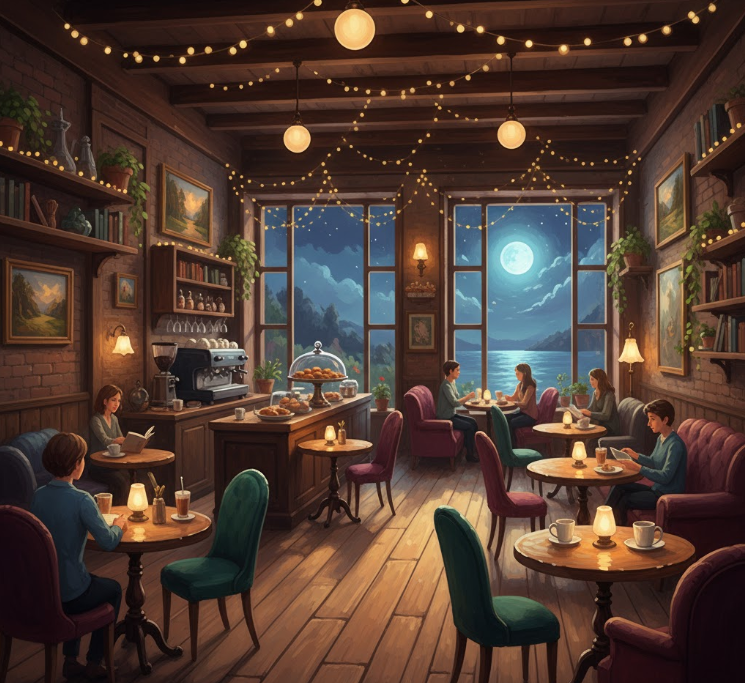
You inherit a café on a mysterious island where time doesn’t quite work right. Days and nights blend together, strange customers appear, and you slowly uncover the island’s secrets while serving coffee and pastries.
This is Animal Crossing meets Stardew Valley meets Twin Peaks. The cozy café management is satisfying: learning recipes, decorating your space, and building relationships with regulars. But there’s an underlying mystery that gradually reveals itself through customer conversations and environmental details.
The game respects your time. No daily tasks you’ll miss if you don’t play. Progress is saved constantly. You can play for 15 minutes or 3 hours, and both feel satisfying. The watercolor art style and lo-fi jazz soundtrack create this perfectly chill atmosphere.
Activities include:
- Recipe experimentation with 100+ drink and food combinations
- Café customization with hundreds of furniture items
- Customer relationship building through conversations
- Island exploration revealing secrets and new ingredients
- Seasonal events and special visitors
- Photography mode to capture your perfect café setup
Why it’s special: It balances cozy gameplay with just enough mystery to keep you invested. The writing is genuinely touching, with customer stories that occasionally made me tear up.
Playtime: 20-25 hours for main story, endless for decorating and experimentation
Price: $19.99
Terra Flora (Switch)
A plant identification and photography game that’s somehow addictive. You explore procedurally generated biomes, photographing plants and learning about ecosystems. It sounds boring on paper but is weirdly captivating in practice.
The Switch’s portability makes this perfect. Ten minutes in handheld mode while commuting or watching TV? Perfect Terra Flora session. The game teaches real botanical concepts in digestible bits, making it both relaxing and educational.
The progression involves unlocking new biomes, camera upgrades, and field journal entries. There’s no combat, no stress, just peaceful exploration and discovery. The pixel art is lovely, with surprising detail in the plant designs.
Why it’s special: It fills a niche I didn’t know existed: games that are genuinely educational without feeling like educational games. Plus, it’s made me notice plants more in real life, which is a weird side effect.
Playtime: 15-20 hours to catalog everything
Price: $12.99
Action and Challenge
For Players Who Want Their Teeth Kicked In
Voidrunner (PC)
A brutally difficult precision platformer where you’re speedrunning through collapsing dimensions. Every level is a gauntlet of instant-death hazards, tight timing windows, and moments that’ll make you question your life choices.
But here’s why it works: the controls are absolutely perfect. When you die (and you will, thousands of times), it never feels unfair. You know exactly what you did wrong. The instant respawns mean you’re back in action immediately, maintaining that flow state.
The game includes extensive accessibility options, including invincibility mode, slowdown, and the ability to skip particularly frustrating sections. The developers understand that “difficult but fair” means different things to different players.
What makes the challenge work:
- Frame-perfect controls with zero input lag
- Generous checkpoint system (every 10-15 seconds of gameplay)
- Built-in speedrun timer and leaderboards
- Ghost replays showing your previous attempts
- Gradual difficulty curve teaching mechanics before testing mastery
Why it’s special: It respects your time despite being punishing. No runs longer than 5 minutes, so failures don’t waste hours. The satisfaction of finally nailing a perfect run is incredible.
Playtime: 10-12 hours for completion, hundreds for mastery
Price: $16.99
Crimson Protocol (PC, Switch)
A top-down action game that feels like Hotline Miami meets John Wick. You’re infiltrating corporate facilities, taking down enemies with brutal efficiency, and uncovering a cyberpunk conspiracy.
The combat is fast, violent, and requires planning. Charge in guns blazing, and you’ll die immediately. Study patrol patterns, use environmental hazards, and execute perfectly, and you’ll clear rooms in seconds while feeling like an absolute badass.
The neon aesthetic and synthwave soundtrack create this intense, stylish atmosphere. Levels are short (2-3 minutes when executed well), encouraging repeated attempts to improve your ranking and time.
Why it’s special: It nails that “restart immediately after death” loop that makes difficult games addictive. The ranking system provides clear goals beyond just completion.
Playtime: 8-10 hours for campaign, much longer for S-ranks on all levels
Price: $17.99
Puzzle Games That’ll Melt Your Brain
For Players Who Love a Mental Challenge
Quantum Threads (PC, Switch)
A puzzle game about manipulating quantum states to solve increasingly mind-bending challenges. Objects exist in superposition until observed, and you must use this property to navigate impossible spaces.
It starts simple: a box is both here and there until you look at it, collapsing it to one location. But by level 20, you’re managing multiple quantum objects, creating elaborate chains of probability, and questioning your understanding of reality.
The game includes an excellent hint system that provides nudges without spoiling solutions. The minimalist aesthetic focuses attention on the puzzles themselves, which are expertly crafted. Each level teaches a concept, then tests your understanding in creative ways.
Why it’s special: It makes complex quantum concepts accessible through gameplay. You don’t need to understand the physics to solve puzzles, but you’ll grasp the concepts intuitively by playing.
Playtime: 12-15 hours for main puzzles, optional challenge modes add another 10+ hours
Price: $18.99
Pattern Breach (PC)
A programming puzzle game disguised as a hacking simulator. You’re writing simple code to break through increasingly complex security systems. Don’t worry if you’re not a programmer; the game teaches everything from scratch.
What starts as basic commands (move forward, turn, interact) evolves into loops, conditionals, and functions. By the end, you’re writing surprisingly sophisticated programs to solve elaborate challenges. The satisfaction of watching your code execute perfectly is immense.
The cyberpunk narrative framing gives context to puzzles, but it’s the programming challenges that shine. The game strikes that perfect balance between accessible and challenging, teaching real programming concepts without being dry or technical.
Why it’s special: It’s one of the best “learn to code” games ever made. People have literally learned programming fundamentals from this and gone on to actual development careers.
Playtime: 15-20 hours
Price: $19.99
Hidden Multiplayer Experiences
Online Games You Haven’t Heard About
Starlight Protocol (PC)
An online cooperative space exploration game for 4 players. You’re a crew managing a ship, exploring procedurally generated star systems, and dealing with random events.
The genius is in the role specialization. One player pilots, another manages engines and power, someone handles weapons and shields, and the fourth operates sensors and comms. Everyone has crucial responsibilities, and coordinating under pressure creates amazing emergent moments.
Sessions last 1-2 hours, with persistent ship upgrades between runs. The community is small but dedicated, and the developers actively participate in Discord helping players coordinate crews.
Why it’s special: It’s basically FTL as a multiplayer experience. The coordination required creates genuine teamwork moments you don’t get in other co-op games.
Price: $21.99
Folklore Fighters (PC, Switch)
A 2D platform fighter featuring characters from global folklore and mythology. Think Smash Bros but with Anansi, Baba Yaga, Sun Wukong, and Coyote as playable characters.
The roster is incredibly diverse, pulling from African, Asian, European, Native American, and Polynesian traditions. Each character has unique movesets reflecting their mythological abilities, and the attention to cultural detail is impressive.
The game includes robust single-player content (arcade mode, story campaigns, training), but the online multiplayer is surprisingly active. Ranked matches, casual play, and custom lobbies all work smoothly. Balance patches arrive regularly, showing the developers care about competitive integrity.
Why it’s special: It fills a gap in the platform fighter genre while educating players about global mythology. Plus, the netcode is excellent (rollback netcode for smooth online play).
Price: $24.99
Best Value Indies
Maximum Entertainment Per Dollar
The Chronicler (PC, Switch)
A narrative adventure game that costs $9.99 but offers 15-20 hours of content. You’re an archivist in a magical library, cataloging stories that come to life as you read them.
The writing is exceptional, with multiple interconnected tales exploring themes of memory, legacy, and the power of stories. Each narrative can be experienced in different orders, with subtle connections rewarding attentive players.
For under ten bucks, this delivers better storytelling than most $60 games. The hand-drawn art style and original soundtrack add to the package. It’s a steal.
Why it’s special: It proves you don’t need explosions and action to create compelling gameplay. Sometimes just well-written stories and thoughtful presentation are enough.
Digital Dungeons (PC, Switch)
A dungeon crawler with pixel art graphics, $12.99 price tag, and easily 40+ hours of content. It’s basically a budget Darkest Dungeon with its own identity.
The party management, dungeon exploration, and roguelite progression create that “one more run” loop. The permadeath is brutal but fair, with enough meta-progression to feel like you’re moving forward. The difficulty options range from “relaxed adventure” to “masochistic nightmare,” accommodating all skill levels.
For the price, the amount of content is absurd. Multiple character classes, hundreds of items, procedural dungeons, and a surprisingly deep story told through item descriptions and environmental details.
Why it’s special: This would be worth $30-40 based on content alone. At $12.99, it’s an absolute no-brainer purchase.
Platform-Specific Recommendations
PC Exclusives Worth Knowing
Fractured Signals (PC Only)
A real-time strategy game that uses actual radio signals and frequency manipulation as its core mechanic. You’re managing competing signals across a battlefield, using interference patterns to disrupt enemies while maintaining your own communications.
It requires mouse and keyboard precision that wouldn’t translate to Switch, but on PC, it’s incredibly satisfying. The learning curve is steep, but mastery feels amazing. The campaign mode teaches concepts gradually, and skirmish mode provides endless replayability.
Why it’s PC-only: The interface complexity and precision required make this impractical for controller-based play. On PC with mouse control, it’s perfectly executed.
Price: $19.99
Switch-Perfect Indies
Pocket Dimensions (Switch Only)
A puzzle game specifically designed for Switch’s portability and touchscreen. You’re manipulating 3D spaces through the touchscreen, rotating and rearranging rooms to create paths.
The touchscreen controls are essential. You can use buttons, but the experience is clearly optimized for touch input. The quick suspend/resume nature of Switch means you can solve one puzzle during a commute, then pick up later without losing progress.
Why it’s Switch-only: The developers built this specifically for Switch’s hardware and use case. It wouldn’t work as well on PC or other consoles.
Price: $14.99
Games to Watch
Upcoming Releases Through End of 2025
Shadowbound (November 2025)
A Metroidvania where your shadow is a separate, controllable entity. Environmental puzzles require coordinating your character and shadow simultaneously. The demo at indie showcases was incredible, and the full release should be special.
Celestial Architects (December 2025)
A god game about shaping planets and guiding civilizations. The early access feedback has been overwhelmingly positive, and the 1.0 launch should provide the complete experience.
Neon Requiem (Late 2025)
A rhythm-action game combining bullet hell mechanics with music. Think Crypt of the NecroDancer meets a shoot-em-up. Every preview has been stellar.
How to Discover More Hidden Gems
Resources Beyond This List
Finding great indie games requires some effort, but these resources help:
Curators and Communities:
- Indie game showcase events (Day of the Devs, Indie Live Expo)
- Steam curators focusing on hidden gems
- Reddit communities like r/IndieGaming and r/NintendoSwitch
- YouTubers who focus on indie coverage (not naming specific channels, but they exist)
Discovery Methods:
- Following indie developers on social media
- Checking “More Like This” on Steam for games you enjoyed
- Browsing itch.io for experimental projects
- Attending virtual indie game festivals
- Wishlisting games during development to catch launch sales
The best finds often come from friend recommendations or stumbling upon something weird that catches your attention. Don’t be afraid to take chances on games that look interesting, even if you’ve never heard of them.
The Verdict: Why Indies Matter in 2025
After exploring dozens of indie games this year, here’s what’s clear: the indie scene isn’t just thriving, it’s essential. While AAA games chase safe formulas and proven mechanics, indies are experimenting, failing, and occasionally creating something transcendent.
What makes 2025’s indie scene special:
- Accessibility: Most of these games cost $15-25, making them affordable impulse purchases
- Innovation: Mechanics and ideas you won’t see in big-budget games
- Passion: Every game feels like it was made by people who genuinely care
- Variety: There’s literally something for everyone, regardless of taste or skill level
- Community: Indie developers actually interact with players and incorporate feedback
The games in this list represent a fraction of what’s available. For every title I mentioned, ten more deserve attention. The indie space is so vibrant that keeping up is genuinely impossible, which is a wonderful problem to have.
Conclusion
The best indie games of 2025 prove that innovation, creativity, and heart matter more than budgets and marketing. Whether you’re exploring painted dimensions, managing quantum states, running a café on a mysterious island, or just vibing with a cozy gardening sim, the indie scene has you covered.
PC and Switch remain the best platforms for indie gaming, offering massive libraries and frequent sales. Building a wishlist and waiting for discounts is a valid strategy, but honestly, most of these games are worth full price.
My advice: pick 2-3 games from this list that sound interesting, take the plunge, and actually play them instead of adding them to your backlog. These games deserve your attention, and supporting indie developers ensures we’ll continue getting creative, risky, and innovative games in the future.
The AAA industry might be struggling with bloated budgets and risk-averse design, but the indie scene is healthier than ever. That’s not just good for gaming, it’s essential. These are the games that’ll push the medium forward, one weird mechanic and heartfelt story at a time.
What indie games have you discovered in 2025 that deserve more attention? Are there hidden gems I missed that should be on everyone’s radar? Drop your recommendations in the comments. I’m always looking for my next obsession, and chances are, someone reading this is too. Let’s share the love for these incredible games.
FAQ: Best Indie Games 2025
What makes a game “indie” in 2025?
An indie game is typically developed by a small team or individual without major publisher backing. In 2025, this includes solo developers, teams under 20 people, and studios self-publishing their work. Some larger “indie” studios blur the line, but generally, indies are characterized by creative freedom, smaller budgets, and direct developer-player relationships rather than strict team size.
Are indie games on Switch the same as PC versions?
Usually yes, with occasional minor differences. Some games run at lower resolution or framerate on Switch due to hardware limitations. However, most 2025 indie releases are optimized well for Switch. PC versions may have better graphics options and mod support, while Switch offers portability. Both platforms typically receive simultaneous updates.
How can I find indie games before they’re popular?
Follow indie game showcases (Steam Next Fest, Day of the Devs), browse itch.io regularly, join indie gaming subreddits, and wishlist games during development. Many developers share progress on Twitter/X and Discord. Steam’s discovery queue and curator recommendations also surface hidden gems. Early access games let you experience titles before official launch.
Do indie games have good replay value?
Many indie games offer exceptional replay value through roguelite mechanics, multiple endings, or gameplay variety. Games like Shattered Dynasty, Hexbound, and Cardboard Kingdom provide dozens of hours through procedural generation and unlockables. Narrative games may have less replay value but often deliver memorable experiences worth revisiting. Check individual game descriptions for content estimates.
Are indie games appropriate for younger players?
Many indie games are family-friendly or specifically designed for younger audiences. Games like Terra Flora, Glitch Garden, and Moonlit Café contain no mature content. However, indies span all ratings from E to M. Always check the game’s rating and content descriptors. Many indie developers are transparent about content warnings on store pages.
Sources & Additional Resources
- Steam Store – Indie Game Category – Comprehensive indie game listings with user reviews and curator recommendations
- Nintendo eShop – Official Switch storefront featuring indie game showcases and sales
- itch.io – Independent game marketplace featuring experimental and emerging indie titles