
Let me set the scene: it’s 2019, and Team Cherry drops a trailer showing Hornet as a playable character in what we assume is DLC. Then they casually mention it’s actually a full sequel. The internet loses its collective mind. Flash forward through years of “Silksong news?” memes, countless speculation threads, and more false hope than any fanbase should endure. And now, finally, impossibly, it’s here.
I’m not going to pretend I’m objective about this. Hollow Knight is one of my favorite games ever made. I’ve put hundreds of hours into exploring Hallownest, memorizing boss patterns, and hunting down every secret. The wait for Hollow Knight Silksong felt eternal. So when I finally booted it up, controller in hand and expectations through the roof, I was terrified it couldn’t possibly deliver.
Spoiler alert: Team Cherry somehow did it. They took everything that made Hollow Knight special, refined it, expanded it, and created something that feels both familiar and entirely fresh. But that doesn’t mean it’s perfect, and it definitely doesn’t mean everyone will love it. After completing the game, finding most secrets, and dying more times than I care to admit, I’m ready to break down whether Silksong lives up to the monumental hype.
This review is spoiler-free for major story beats but will discuss mechanics, areas, and general gameplay structure. If you want to go in completely blind, bookmark this and come back after playing. For everyone else wondering if the wait was worth it, let’s dive into Pharloom.
Hornet Changes Everything
A Completely Different Protagonist
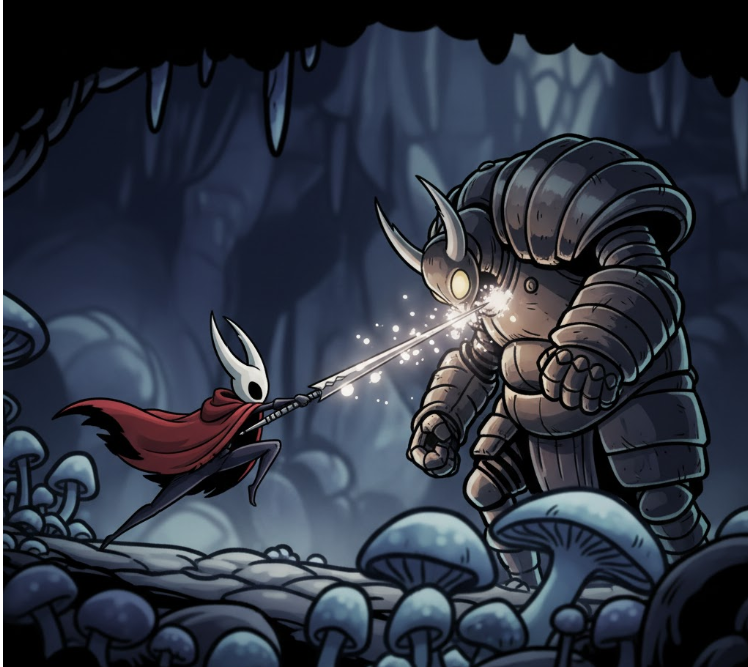
Playing as Hornet instead of the Knight fundamentally transforms the Hollow Knight experience. Where the Knight was slow, methodical, and tanky, Hornet is fast, aggressive, and fragile. This isn’t just a cosmetic change. The entire game is built around her mobility and playstyle.
What makes Hornet unique:
- Speed and agility: Movement is noticeably faster with more aerial control
- Needle combat: Her weapon has longer reach than the Knight’s nail but different timing
- Thread and tools: Her silk-based abilities create new traversal and combat options
- Aggressive design: The game rewards offense over defensive play
- Stamina-like system: Tool usage is limited, requiring resource management
The needle feels fantastic. It has this satisfying weight to it, and the extended range lets you space enemies differently than in Hollow Knight. But the timing is trickier. You can’t just mash attack and win. Hornet’s combos require rhythm and positioning.
Her silk abilities are where things get really interesting. Instead of traditional spells, you have tools that consume silk (essentially mana that regenerates). These tools handle traversal, combat, and puzzle-solving. The bandage tool heals you but leaves you vulnerable. The tacks create platforms or damage enemies. Each tool has multiple uses depending on context, encouraging experimentation.
Learning Curve for Returning Players
Here’s something that caught me off guard: muscle memory from Hollow Knight actively works against you initially. I kept trying to play defensively, relying on healing opportunities and patient positioning. Silksong punishes that approach.
The game wants you aggressive. Hitting enemies builds silk, which powers your tools, which let you hit more enemies. It’s a positive feedback loop that rewards offense. Sitting back and waiting for openings often gets you overwhelmed. This took me several hours to internalize, and I died a lot during that adjustment period.
The healing tool is deliberately less generous than in Hollow Knight. It’s slower, costs more silk, and leaves you exposed longer. You can’t just tank damage and heal through it. You need to actually avoid getting hit, which sounds obvious but represents a significant difficulty spike from the original.
For new players who never touched Hollow Knight, this might actually be easier. You won’t have bad habits to unlearn. The game teaches its mechanics clearly through early encounters, and the difficulty ramps smoothly.
Pharloom: A Kingdom Worth Exploring
Verticality and Scope
Pharloom is massive. Not just “bigger than Hallownest” massive, but genuinely intimidating in scope. The kingdom is built vertically, starting from a bottom prison and ascending through various regions toward the citadel above.
This vertical structure changes exploration fundamentally. In Hollow Knight, you often moved horizontally through connected areas. Silksong emphasizes climbing, with multiple paths upward and secrets hidden in vertical spaces. The layout encourages creative use of Hornet’s mobility tools in ways the Knight’s abilities never demanded.
The major regions include:
- Moss Grotto: The starting prison area with organic, overgrown architecture
- Coral Cascades: Waterfall systems with vertical traversal challenges
- Gilt City: A bustling town with NPCs, shops, and branching paths
- Deep Docks: Industrial port areas with machinery and hazards
- Greymoor: Haunting gothic architecture and difficult enemies
- Citadel: The upper reaches (avoiding spoilers here)
Each region has distinct visual identity, enemy types, and traversal gimmicks. The environmental variety exceeds Hollow Knight’s, which already impressed with its biome diversity. You’re constantly seeing new things, even 20 hours in.
Interconnected Design Excellence
The map design is masterful. Pharloom feels like a real place with logical geography rather than a video game level. Areas connect in ways that make spatial sense, and discovering shortcuts that loop back to familiar regions creates those satisfying “aha!” moments.
Team Cherry improved the quality-of-life aspects too. Benches (save points) are more frequent early on, reducing frustrating corpse runs. Fast travel unlocks earlier and connects more locations. The map system works similarly to Hollow Knight but with clearer indicators for unexplored areas.
One brilliant addition: the game marks items you’ve missed on the map after purchasing a certain item. No more combing through every room wondering if you grabbed that one pickup. This respects your time without holding your hand through exploration.
Combat Evolution
Boss Fights That Push Your Limits
If you thought Hollow Knight had tough bosses, buckle up. Silksong’s boss roster is absolutely brutal, and I mean that as the highest compliment. These fights are faster, more aggressive, and demand mastery of Hornet’s full toolkit.
What makes bosses special:
| Aspect | Hollow Knight | Silksong |
|---|---|---|
| Speed | Moderate pacing | Relentless aggression |
| Attack Telegraphing | Clear, generous | Shorter windows |
| Healing Opportunities | Multiple safe moments | Rare, risky |
| Phase Transitions | Predictable patterns | Dynamic adaptations |
| Optional Content | Some hidden bosses | Many optional challenges |
The bosses adapt to your playstyle. If you spam the same tool repeatedly, they’ll counter it. If you stay too defensive, they pressure harder. It forces you to actually learn the fights rather than cheesing with overpowered builds.
Some standout encounters (no spoilers):
Lace: An early rival fight that sets the tone perfectly. Fast, technical, and unforgiving. This boss alone will filter players who aren’t ready for Silksong’s difficulty.
The Hunted: A pursuit encounter that combines combat with traversal. You’re fleeing while fighting, creating this intense gauntlet experience.
Coral Guardian: Uses the environment as a weapon, flooding areas and changing the battlefield dynamically. Requires constant adaptation.
I won’t spoil the late-game bosses, but they rank among the best fights in any game I’ve played. The final gauntlets rival Pantheon of Hallownest in difficulty while feeling more fair due to Hornet’s expanded toolkit.
Regular Enemies Are No Joke
The regular enemy roster is significantly more dangerous than Hollow Knight’s. Early enemies have moves that would be mid-game threats in the original. By late game, basic encounters can kill you if you’re careless.
This increased danger serves the gameplay loop. Combat is more engaging when every room poses legitimate threat. You can’t autopilot through areas even after overlevel grinding (which is less effective here anyway). Enemies have better AI, more complex attack patterns, and often work in groups that complement each other.
The enemy variety is staggering. I’m 25 hours in and still encountering completely new enemy types with unique mechanics. The bestiary must have 200+ entries. Each region has a distinct enemy aesthetic and behavior profile.
Progression and Customization
The Shard System Reimagined
Silksong replaces Hollow Knight’s charm system with shards: equippable upgrades that modify Hornet’s abilities. While functionally similar to charms, shards feel more impactful because they directly enhance your tools rather than providing passive bonuses.
You can equip multiple shards, but they compete for limited notches (just like charm notches). The strategy comes from building synergies between shards and tools. Some combinations create powerful effects that trivialize certain encounters while being useless in others.
Sample shard effects:
- Increase silk generation from hits
- Add elemental damage to needle strikes
- Improve healing efficiency but reduce maximum health
- Create damaging AOE when using specific tools
- Enhance mobility at the cost of attack power
The build variety is enormous. I’ve seen players tackling the same boss with completely different loadouts, each viable but requiring different tactics. There’s no single “best” build, just different approaches that suit different playstyles.
Finding shards requires thorough exploration. Many are hidden behind optional challenges, secret areas, or obscure NPC questlines. Completionists will spend hours hunting them all down.
Tool Upgrades and Unlocks
As you progress, you unlock new tools and upgrade existing ones. Each upgrade noticeably changes how the tool functions, opening new traversal options and combat strategies.
The progression is smartly paced. You’re regularly getting new toys to play with, keeping the gameplay fresh 20+ hours in. Upgrades often let you access previously unreachable areas, encouraging backtracking without feeling tedious.
Some tools have multiple upgrade paths, letting you specialize. One player might focus on mobility tools for speedrunning, while another emphasizes combat tools for boss rush challenges. The flexibility supports diverse playstyles.
Difficulty: Fair or Frustrating?
The Steep Challenge Curve
Let’s address the elephant in the room: Silksong is hard. Significantly harder than Hollow Knight’s base game, possibly on par with the Godmaster DLC content. If you struggled with Hollow Knight, Silksong will test you even more.
Why it’s harder:
- Faster enemy attack speeds
- Less forgiving healing mechanics
- Tighter platforming challenges
- More aggressive boss design
- Limited overpowered cheese builds
- Resource management adding complexity
The difficulty is mostly fair, though. Deaths feel earned rather than cheap (usually). When you die, you can identify what went wrong and adjust. The game has clear telegraphs, consistent rules, and rewards pattern recognition.
That said, some encounters feel overtuned. Early game difficulty spikes can be brutal when you’re still learning Hornet’s moveset. Certain bosses have attacks that feel almost unreactable until you’ve seen them multiple times. Platforming sections sometimes require frame-perfect inputs that frustrate more than challenge.
Accessibility and Options
Team Cherry included more difficulty options than Hollow Knight offered, though “easy mode” still isn’t really easy by most standards:
Available settings:
- Damage modifiers (take less damage)
- Invincibility frames extension
- Infinite silk mode (removes resource management)
- Slower enemy speeds
- Enhanced telegraphing for attacks
- Practice modes for bosses
Even with assists enabled, Silksong requires skill and learning. The assists reduce frustration but don’t eliminate challenge entirely. This is still a game that expects you to learn, adapt, and improve.
For hardcore players, there are built-in challenge modes that make the game significantly harder. Permadeath runs, boss rushes, and speed mode challenges provide endgame content for masochists.
Art and Sound Design
Visual Masterpiece
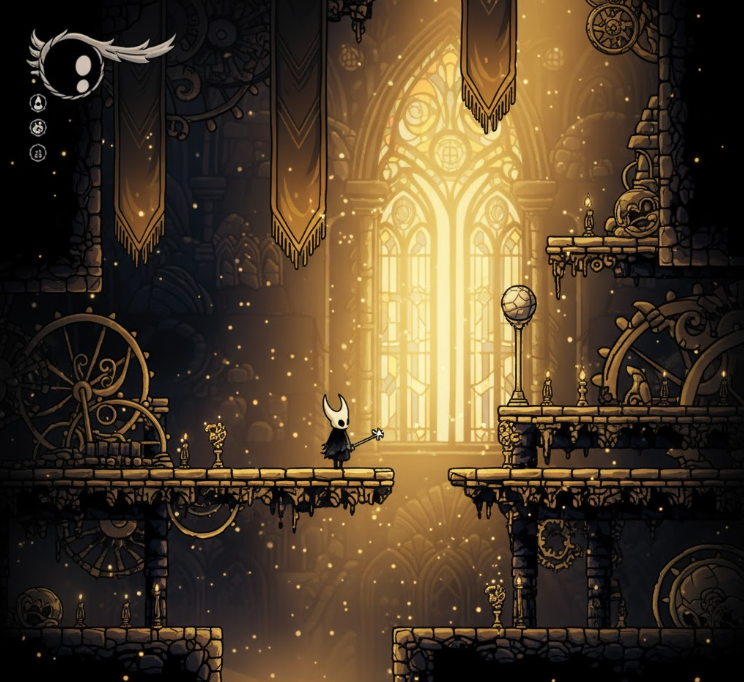
Silksong is gorgeous. The hand-drawn art style returns with even more detail, better animation, and more varied environments. Every frame could be a wallpaper. The attention to environmental storytelling through visual design is extraordinary.
The character animation particularly shines. Hornet’s movement is fluid and expressive. Enemies telegraph attacks through wind-up animations that are both functional and beautiful. Bosses have this weight and presence that makes encounters feel epic.
The particle effects deserve special mention. Silk abilities, enemy attacks, and environmental hazards create this visual feast without overwhelming the screen. You can always track what’s happening despite the chaos, which is crucial for a game this fast-paced.
Christopher Larkin’s Triumphant Return
Christopher Larkin composed Hollow Knight’s iconic soundtrack, and he’s outdone himself with Silksong. The music perfectly captures each region’s atmosphere while maintaining cohesive identity across the game.
Boss themes are absolute bangers. Each major fight has a unique track that enhances the intensity without drowning out audio cues. The way music swells during phase transitions gives fights this cinematic quality.
The ambient tracks in exploration areas create mood without being intrusive. You can listen for hours without fatigue, which matters in a game where you’ll spend dozens of hours exploring.
Sound design complements the music beautifully. Hornet’s needle has this distinct metallic ring. Each tool has unique audio feedback. Enemy attacks have clear audio telegraphs. The soundscape is information-dense without being overwhelming.
Story and Lore
Hornet’s Journey (No Major Spoilers)
The narrative follows Hornet as she ascends through Pharloom, seeking answers about her capture and the kingdom’s mysteries. The story is told through environmental details, NPC dialogue, and cryptic lore tablets, maintaining Hollow Knight’s subtle storytelling approach.
Hornet is a more defined character than the Knight, which changes the narrative dynamic. She has voice lines (still gibberish like Hollow Knight, but expressive), relationships with NPCs, and clear motivations. This makes the story more immediately engaging while maintaining the series’ mysterious atmosphere.
The lore goes deep. Pharloom has complex history involving multiple factions, political intrigue, and connections to Hallownest that reward attentive players. The worldbuilding rivals Hollow Knight’s, which is saying something given how beloved that game’s lore became.
What the story explores:
- Hornet’s identity and past
- Pharloom’s rise and fall
- The nature of silk and its significance
- Connections to Hallownest’s fate
- Multiple kingdoms’ interconnected histories
NPC Characters and Quests
The NPC cast is larger and more interactive than Hollow Knight. You’ll encounter travelers, merchants, rivals, and allies throughout your journey. Many have questlines that span multiple regions with meaningful rewards.
The dialogue writing maintains the quirky, melancholic tone of the original while giving characters more personality. Voice acting (again, gibberish with subtitles) brings life to interactions. You’ll genuinely care about these bugs and their fates.
Some NPCs provide optional lore that enriches the world without being mandatory. Others offer gameplay benefits through shops, quest rewards, or information. The balance between story NPC and functional NPC feels natural.
Replayability and Endgame
What Keeps You Coming Back
Completing Silksong’s main story takes roughly 20-25 hours for most players. But that’s barely scratching the surface of available content.
Endgame content includes:
- Boss Rush Mode: Fight all bosses consecutively with customizable modifiers
- Speed Running: Built-in timer and leaderboards encourage optimization
- 100% Completion: Finding all shards, secrets, and lore tablets
- Challenge Modes: Special difficulty modifiers for second playthroughs
- Secret Areas: Optional zones with the hardest content
- Achievement Hunting: Specific challenge achievements for skilled players
The game encourages multiple playthroughs through different build possibilities. You can’t max everything in one run, so different playstyles require separate saves. Speedrunning community will keep this game alive for years.
The most hardcore content rivals anything in Hollow Knight’s Godmaster DLC. Optional boss variants, hidden challenges, and permadeath modes provide near-infinite skill ceiling. Casual players can finish the story and feel satisfied, while hardcore players have hundreds of hours of challenge content.
Technical Performance
How It Runs in 2025
Silksong runs beautifully across all platforms. Team Cherry optimized extensively, resulting in stable performance even during visually intense moments.
Performance breakdown:
PC: Native 4K support, unlocked framerate, smooth as butter on mid-range hardware. The game isn’t demanding, so even older systems handle it well.
Switch: Solid 60fps at 1080p docked, 720p handheld. Occasional minor frame drops during particle-heavy moments but nothing game-breaking. Portable Silksong is fantastic.
PlayStation/Xbox: Standard 60fps at 1440p-4K depending on console. DualSense features on PS5 add haptic feedback for different actions.
Load times are nearly instant on all platforms with SSD storage. Deaths respawn you in under two seconds. Fast travel is instantaneous. Zero technical friction interrupting the flow.
Bugs and Patches
At launch, Silksong has been remarkably stable. I encountered one softlock in 30 hours (fixed by reloading), and a handful of minor visual glitches. Nothing game-breaking or common enough to impact the experience significantly.
Team Cherry has already pushed patches addressing reported issues. Their track record with Hollow Knight suggests they’ll continue supporting Silksong post-launch with bug fixes and potentially content updates.
Is It Worth the Wait?
Managing Expectations vs Reality
The wait for Silksong became a meme. Years of silence, false hope, and “Silksong news?” comments created impossible expectations. Could any game justify that anticipation?
Honestly? It depends on what you expected.
If you wanted:
- More Hollow Knight with refined mechanics → You got it
- A perfect sequel improving everything → Mostly achieved
- Completely revolutionary gameplay → Probably oversold
- Worth 4+ years of waiting → Subjective, but I’d say yes
Silksong is not a revolutionary reinvention. It’s an evolutionary sequel that refines the formula while making meaningful changes. If you loved Hollow Knight, you’ll almost certainly love this. If you bounced off Hollow Knight’s difficulty or pacing, Silksong won’t convert you.
The game justifies its existence by being confidently different. Hornet plays distinctly enough that this feels like a new experience rather than expensive DLC. Pharloom has its own identity separate from Hallownest. The challenge escalation rewards returning players without alienating newcomers.
Who Should Buy Silksong?
The Honest Recommendation
After thoroughly exploring Pharloom, here’s who will love Silksong:
You should absolutely buy Silksong if:
- You loved Hollow Knight and want more (obvious, but true)
- You enjoy challenging Metroidvanias with skill-based combat
- Intricate worldbuilding and environmental storytelling appeal to you
- You appreciate hand-drawn art and incredible soundtracks
- You want a game with serious replay value and endgame content
- You’re patient enough to master difficult mechanics
- Exploration-focused gameplay is your preference
You should wait or skip if:
- You struggled with Hollow Knight’s difficulty (this is harder)
- You prefer story-driven games with clear narratives
- Punishing combat frustrates rather than motivates you
- You need constant direction and quest markers
- You bounced off the first game’s pacing or structure
- You’re expecting something radically different from Hollow Knight
For returning fans, this is a day-one purchase. For newcomers, consider trying Hollow Knight first (it’s cheaper and lets you gauge if you’ll enjoy Silksong’s design philosophy).
Conclusion
Hollow Knight Silksong is that rare sequel that honors its predecessor while carving its own identity. Team Cherry didn’t just make “more Hollow Knight.” They built a distinct experience that stands alongside the original as a masterpiece of the Metroidvania genre.
Is it the perfect sequel? Nearly. The increased difficulty might alienate some players, and early game balance occasionally frustrates. But these are minor blemishes on an otherwise exceptional game. The movement feels amazing, combat is visceral and satisfying, Pharloom is breathtaking, and the endgame content provides hundreds of potential hours.
The wait was long. Painfully long. But the final product justifies that patience. Team Cherry took the time to get it right, and it shows in every beautifully animated frame, every carefully tuned boss fight, and every hidden secret waiting to be discovered.
Silksong isn’t just a great sequel. It’s proof that indie studios can compete with any AAA production when they prioritize craft over crunch, quality over quarterly earnings, and artistic vision over market trends. This is gaming at its best: challenging, beautiful, rewarding, and made with obvious love for the medium.
Welcome to Pharloom. You’re going to die a lot, and you’re going to love every second of it.
For those who’ve played Silksong, how does it compare to your expectations after the long wait? Which boss fight broke you, and which region impressed you most? For those still on the fence, what would push you to finally take the plunge? Let’s discuss in the comments. I’m genuinely curious how different players are experiencing Hornet’s journey, especially those who never played the original.
FAQ: Hollow Knight Silksong
Do I need to play Hollow Knight before Silksong?
No, Silksong is designed as a standalone experience. While there are connections to Hallownest and references rewarding fans, the story works independently. That said, playing Hollow Knight first helps you appreciate the evolution in mechanics and lore. Silksong is also significantly harder, so starting with Hollow Knight lets you learn Team Cherry’s design philosophy with a gentler difficulty curve.
How long does it take to beat Silksong?
Main story completion takes 20-25 hours for most players. Thorough exploration adds another 10-15 hours. True 100% completion with all secrets and challenges can take 50+ hours. Speedrunners can finish in under 3 hours with practice, but casual playthroughs will take significantly longer depending on skill level and exploration habits.
Is Silksong harder than Hollow Knight?
Yes, considerably. Silksong’s base difficulty exceeds Hollow Knight’s main game and approaches the challenge level of the Godmaster DLC. Bosses are faster and more aggressive, healing is less forgiving, and enemy encounters are consistently threatening. However, Hornet’s expanded toolkit provides more options for skilled players. Difficulty assists help but don’t eliminate the challenge entirely.
What platforms is Silksong available on?
Silksong launched simultaneously on PC (Steam, GOG, Epic), Nintendo Switch, PlayStation 4/5, and Xbox One/Series X|S. It’s also available day one on Xbox Game Pass. Cross-platform saves are not supported, but performance is excellent across all platforms. Switch offers portability while PC provides the best graphics options and modding potential.
Will there be Silksong DLC or updates?
Team Cherry hasn’t announced DLC plans at launch. Hollow Knight received substantial free content updates (Hidden Dreams, Grimm Troupe, Godmaster), so similar post-launch support is possible but not confirmed. The game feels complete at launch with substantial content. Any future additions would likely be free updates rather than paid DLC based on Team Cherry’s history.
Sources & Additional Resources
- Team Cherry Official Website – Silksong Information – Developer updates, patch notes, and official announcements
- Hollow Knight Wiki – Comprehensive lore, mechanics guides, and community-maintained information database
- r/HollowKnight Reddit – Active community for discussion, tips, lore theories, and speedrunning strategies