
I still remember playing the original The Last of Us back in 2013 on my PS3, sitting in my dimly lit living room, absolutely mesmerized by what Naughty Dog had created. Fast forward to 2022, and there I was, controller in hand again, playing what Sony called a “ground-up remake” of the same game. My first thought? “This looks incredible.” My second thought? “Wait, did they actually change anything besides the graphics?”
That’s the question that’s been dividing the gaming community since the remake launched. Some players swear it’s a transformative experience that justifies the price tag. Others argue it’s barely more than a remaster with a fresh coat of paint. Having played through both versions multiple times now, I can tell you the truth is somewhere in the middle—and way more nuanced than most reviews let on.
The Last of Us (2013) vs The Last of Us Remake isn’t just about comparing polygon counts and texture resolution. It’s about understanding what Naughty Dog rebuilt from scratch, what they kept intact, and whether those changes fundamentally alter the experience. Whether you’re a longtime fan wondering if it’s worth revisiting, or a newcomer trying to decide which version to play, this deep dive covers everything that actually changed—and what stayed surprisingly the same.
Let’s break down the graphics overhaul, gameplay refinements, accessibility improvements, and yes, whether that $70 price tag makes any sense. By the end, you’ll know exactly what you’re getting with each version.
Graphics and Visual Fidelity Comparison
This is where the remake truly shines, and honestly, it’s not even close. The visual leap from the PS3 original to the PS5 remake is staggering in ways that screenshots don’t fully capture. You need to see these games running side by side to appreciate just how much has changed.
The character models are completely rebuilt. Joel and Ellie don’t just look sharper—they look like different, more realistic versions of themselves. The original had impressive facial animations for 2013, but the remake uses the same motion capture and rendering technology from The Last of Us Part II. Every wrinkle, every subtle emotional expression, every strand of hair is rendered with a level of detail that makes the original look almost cartoonish by comparison.
Environmental detail is night and day different. The remake fills every scene with atmospheric clutter, realistic lighting, and environmental storytelling that wasn’t possible on PS3 hardware. That abandoned building you’re exploring? In the original, it’s recognizably post-apocalyptic but fairly sparse. In the remake, you’ll notice specific details—photographs on walls, personal belongings scattered around, layers of dust and decay that make each location feel like it had a real history before the infection.
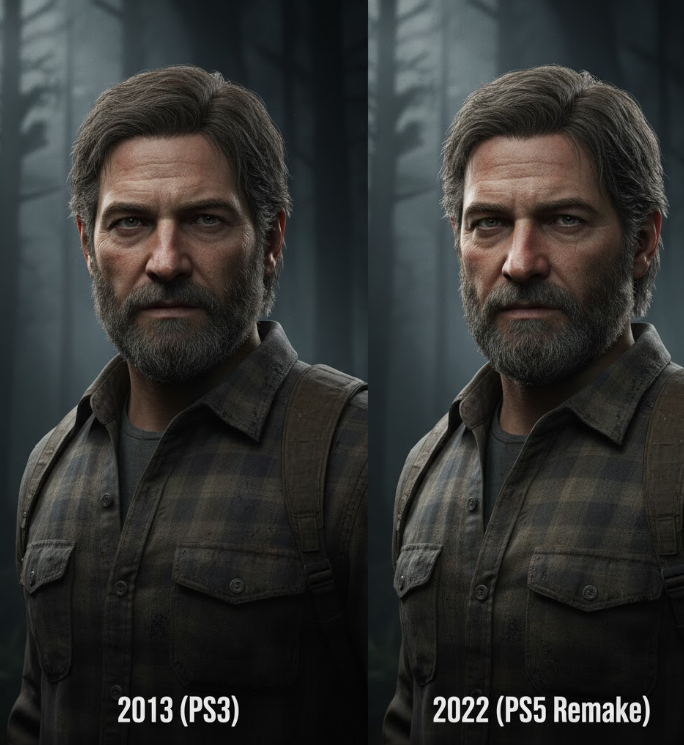
Lighting is perhaps the most transformative change. The original used baked lighting—essentially, light and shadows were pre-calculated and couldn’t change. The remake implements real-time dynamic lighting that responds to your movements, the time of day, and environmental conditions. Watch a flashlight beam cut through darkness in the remake versus the original, and you’ll see what I mean. It’s the difference between “video game lighting” and “this actually looks real.”
Performance modes give you options the original never had. Quality mode runs at native 4K with 30fps, maximizing visual fidelity. Performance mode targets 60fps at a slightly lower resolution. There’s even a 40fps mode if you have a 120Hz display, which is a sweet spot between smoothness and visual quality. The original? Locked 30fps at 720p with frequent frame drops during intense sequences.
But here’s something interesting: the art direction is so strong in the original that it still holds up reasonably well today. Sure, the remake looks technically superior in every measurable way, but the 2013 version’s aesthetic choices were so solid that it doesn’t feel as outdated as many games from that era. The remake enhances what was already great rather than fixing what was broken.
Gameplay Mechanics and Combat Changes
This is where things get controversial. Naughty Dog insisted the remake features “modernized gameplay,” but what does that actually mean in practice? Having played both versions extensively, the changes are there—they’re just more subtle than the visual overhaul.
The most significant gameplay improvement is AI behavior. Enemy AI in the remake is noticeably smarter and more unpredictable. Clickers don’t just patrol fixed routes anymore—they react dynamically to sounds and player position. Human enemies communicate more naturally, flank more aggressively, and actually search for you when they know you’re hiding nearby. I’ve had moments in the remake where enemies surprised me with tactics I never saw in the original.
Companion AI received a massive upgrade. Remember how Ellie would sometimes run directly in front of enemies in the original, completely breaking immersion even though they couldn’t see her? That’s fixed. Companions move more intelligently, take cover appropriately, and generally behave like they’re actually trying to survive rather than existing in some magic invisible bubble.
Combat encounters feel slightly different because of these AI changes, but the core mechanics are largely identical. You’re still scavenging resources, crafting items, using stealth when possible, and fighting desperately when things go wrong. The controls are a bit tighter and more responsive, but if you’re expecting the significant combat evolution between The Last of Us and Part II, you’ll be disappointed. This isn’t a reimagining of combat—it’s a refinement.
Stealth mechanics got minor tweaks. Going prone is now an option (inherited from Part II), which opens up some new approach angles and hiding spots. The grass and environmental cover work slightly better for concealment. But fundamentally, if you learned stealth strategies in the original, they still work in the remake. The level design is identical, after all.
One subtle but impactful change: weapon handling feels more weighty and realistic, again borrowing from Part II’s improvements. Aiming has a slight inertia to it that makes combat feel more grounded and less “gamey.” Some players love this increased realism; others find it makes precise aiming slightly more challenging. I appreciate it because it reinforces the desperate, scrappy nature of combat in this world.
Audio Design and Voice Acting
The audio design in the remake is phenomenal, representing a genuine evolution from the already-excellent original. Wearing headphones while playing the remake is almost a different experience entirely thanks to the 3D audio implementation on PS5.
The voice acting is identical—Troy Baker and Ashley Johnson’s performances are unchanged because Naughty Dog wisely decided not to re-record anything. Their original performances were near-perfect, and messing with that would’ve been a huge risk. However, the audio mixing and presentation has been completely overhauled to take advantage of modern hardware.
Environmental audio is dramatically improved. In the original, sounds had directionality but felt somewhat flat. In the remake, 3D audio creates genuine spatial awareness. You can pinpoint exactly where that clicker is clicking, which direction gunfire is coming from, and how close enemies are based purely on audio cues. This isn’t just immersive window dressing—it’s functionally useful information that affects how you play.
The musical score by Gustavo Santaolalla remains unchanged, which is the right call. His haunting, minimalist compositions are iconic and timeless. However, the orchestration and mixing have been refined, making certain emotional beats hit even harder. That guitar theme still brings chills, but it sounds richer and more present in the remake’s audio mix.
Sound effects across the board are more detailed and realistic. Weapon sounds have more punch and variety. Environmental sounds—rain, wind, crumbling buildings, wildlife—create a more convincing post-apocalyptic soundscape. The original had good sound design; the remake has exceptional sound design.
Voice clarity during gameplay has improved significantly. In the original, dialogue could sometimes get buried under ambient noise or music. The remake’s dynamic audio mixing ensures you can always hear important character moments and plot-relevant conversations while still maintaining immersive environmental audio.
Accessibility Features and Quality of Life
This is where the remake absolutely justifies its existence beyond the visual upgrade. The accessibility options in the remake are industry-leading and transform who can experience this story.
The original had virtually no accessibility options beyond basic difficulty settings and subtitle toggles. The remake includes over 60 accessibility features covering visual, auditory, and motor accessibility needs. We’re talking about things like high contrast mode, enhanced listen mode, audio cues for puzzle solutions, customizable controls with full button remapping, and numerous difficulty modifiers that let you fine-tune the experience.
Visual accessibility includes options for colorblind modes, motion sickness reduction, and navigational assistance. There’s even a feature that provides detailed audio descriptions of important visual story elements for blind or low-vision players. Watching these features in action is genuinely moving—Naughty Dog clearly invested serious resources into making this game accessible to everyone.
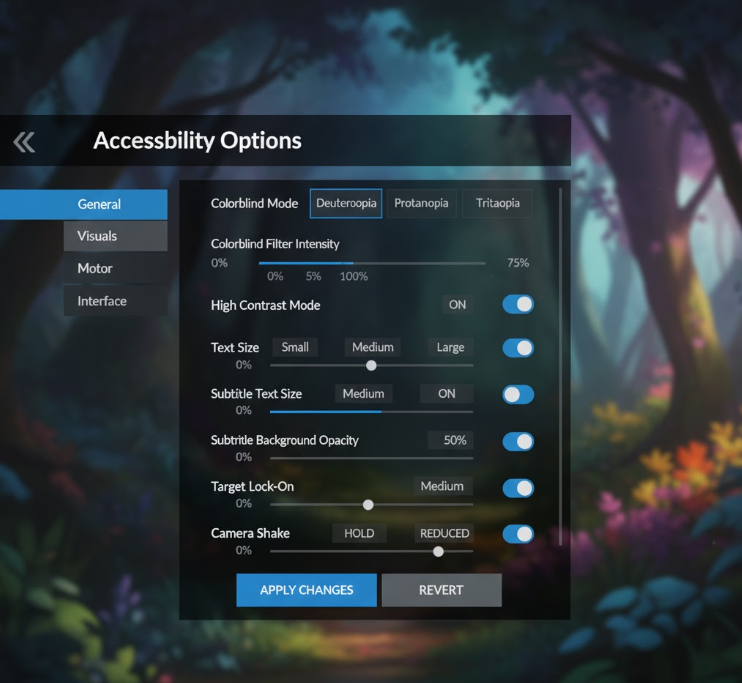
Motor accessibility features let players adjust aim assist strength, enable automatic weapon sway reduction, and customize control schemes extensively. You can make combat as easy or challenging as you need based on your capabilities. There’s even an option to skip combat encounters entirely if you want to experience the story without the gameplay.
Quality of life improvements extend beyond accessibility. The remake adds a permadeath mode for masochists, a speedrun mode with on-screen timer, and various other modifiers that increase replayability. Photo mode is comprehensive, letting you capture and share moments from this beautiful world.
Loading times are basically non-existent on PS5 compared to the original’s sometimes lengthy loads. Fast travel between chapters is seamless. The UI is cleaner and more intuitive. These small improvements add up to a significantly more pleasant experience, even if they’re less flashy than the graphics overhaul.
Honestly, if someone with accessibility needs asks me which version to play, it’s not even a question. The remake’s comprehensive accessibility features are genuinely game-changing and represent where the industry should be heading.
Story and Narrative Differences
Here’s where things get interesting: the story is essentially identical, but the improved presentation changes how certain moments land emotionally. The script is unchanged—every line of dialogue is the same—but the delivery through enhanced visuals and audio creates subtly different impacts.
Character expressions in the remake convey emotions the original could only approximate. That quiet moment between Joel and Ellie where they’re processing trauma? In the original, you understood the emotion through context and voice acting. In the remake, you can see it in their faces—the thousand-yard stares, the slight trembling, the genuine human vulnerability. It hits different when the visual fidelity matches the writing quality.
Environmental storytelling is significantly enhanced. The original told its story through dialogue, cutscenes, and occasional notes you’d find. The remake does all that but adds layers of visual detail that tell stories without words. You’ll notice small details that add context to the world—how people lived before the infection, how they tried to survive after, the human cost of the apocalypse. It’s richer world-building even though the plot is unchanged.
Pacing feels slightly different even though the structure is identical. The remake’s improved performance (specifically 60fps mode) makes traversal and exploration feel snappier, which affects the rhythm of the experience. Some players actually prefer the original’s 30fps pacing because it felt more deliberate and cinematic. This is subjective, but it’s worth noting.
The prologue with Sarah hits harder in the remake. It was already devastating in 2013, but the visual and performance improvements make it almost unbearable (in the best way). If you didn’t cry during the original’s opening, the remake might break you. The emotional impact of Naughty Dog’s storytelling only intensifies when the presentation matches the writing quality.
No content was added or removed. This isn’t like a director’s cut with extra scenes or alternative endings. If you’ve played the original, you’ve experienced this story. The remake tells the same story with significantly better production values, which matters more for some players than others.
Performance and Technical Analysis
From a pure technical standpoint, the remake is a showcase for what the PS5 can do. The original pushed the PS3 to its absolute limits, and the remake does the same for Sony’s current-generation hardware.
The remake runs at three performance modes: Quality Mode (4K/30fps with maximum visual settings), Performance Mode (dynamic 4K/60fps), and 40fps Mode (for 120Hz displays). In my experience, Performance Mode is the sweet spot. The 60fps makes gameplay feel dramatically more responsive, and the visual quality difference versus Quality Mode is honestly minimal unless you’re pixel-peeping.
Load times are transformative thanks to the PS5’s SSD. Chapter loads that took 30-45 seconds on PS3 now happen in under 5 seconds. Death respawns are nearly instantaneous instead of the frustrating 10-15 second waits in the original. This might seem minor, but it significantly reduces friction and keeps you immersed in the experience.
The original struggled with frame rate stability, especially during combat-heavy sections. The remake maintains rock-solid performance across all modes. I never experienced frame drops, stuttering, or technical issues during my playthrough. For a game targeting 60fps, that consistency is crucial.
DualSense implementation is thoughtful without being gimmicky. Adaptive triggers provide weapon-specific resistance (pulling a bow feels different from firing a pistol), and haptic feedback adds tactile information about your environment and actions. It’s subtle enhancement rather than the forced “look at this feature!” implementation some games have.
The PC version (released later) offers even more flexibility with uncapped frame rates, ultrawide support, and scalable graphics options. If you have the hardware, the PC version is technically the definitive way to experience the game, though the PS5 version remains excellent.
Comparison Table: Key Differences at a Glance
| Feature | The Last of Us (2013) | The Last of Us Remake (2022) |
|---|---|---|
| Platform | PS3, PS4 Remaster | PS5, PC |
| Resolution | 720p (PS3), 1080p (PS4) | Up to 4K native |
| Frame Rate | 30fps (drops frequently) | 30/40/60fps (stable) |
| Character Models | ~5,000-15,000 polygons | ~200,000+ polygons |
| AI Behavior | Predictable patrol patterns | Dynamic, reactive behavior |
| Accessibility Options | Basic (2-3 options) | Comprehensive (60+ options) |
| Load Times | 30-45 seconds | 3-5 seconds |
| Photo Mode | No | Yes (comprehensive) |
| Combat Mechanics | Original system | Part II refinements |
| Price at Launch | $60 | $70 |
| DualSense Features | N/A | Adaptive triggers, haptics |
| Prone Mechanic | No | Yes |
This table highlights the measurable differences, but remember that numbers don’t tell the whole story. The “feel” of playing each version is where the real differences emerge.
Which Version Should You Play?
This is the question everyone wants answered, and unfortunately, the answer is “it depends.” Let me break down recommendations for different types of players.
If you’ve never played The Last of Us: The remake is unquestionably the version to play. You don’t have nostalgia for the original, so you won’t feel like you’re paying extra for a minor upgrade. You’ll experience one of gaming’s best stories with the best possible presentation. The $70 price is steep, but if you wait for a sale (it regularly drops to $40-50), it’s absolutely worth it.
If you played the original and want to revisit it: This gets trickier. If you have a PS5 and genuinely care about visual fidelity, performance, and accessibility features, the remake offers a noticeably enhanced experience. If you’re on a budget or don’t particularly care about graphics upgrades, the PS4 Remaster (which costs significantly less) tells the same story just fine.
If you played the original recently: Unless you’re a diehard fan or accessibility features are crucial for you, the remake probably isn’t worth full price. The improvements are real but iterative rather than revolutionary. Wait for a significant sale or skip it entirely—you’ve already experienced this story, and the core experience isn’t fundamentally different.
If you’re a trophy hunter or completionist: The remake has a separate trophy list from the original, so if you want to platinum it again, you’ll get additional playtime value. The speedrun mode and various modifiers also add replayability for people who like challenging themselves beyond the standard playthrough.
If accessibility is a concern: Get the remake, full stop. The comprehensive accessibility options are worth the price if they mean the difference between experiencing this story or not. Naughty Dog set a new standard here, and it’s genuinely important work.
I personally think the “correct” answer for most players is to wait for the remake to hit the $30-40 range (which it inevitably will), then experience it as the definitive version. At full price, it’s a harder sell unless you’re either new to the game or deeply invested in having the absolute best version.
The Controversy Around Pricing and Value
Let’s address the elephant in the room: a lot of players are genuinely angry about the remake’s $70 price tag. The discourse around this game’s value proposition has been heated, to say the least, and both sides have legitimate points.
The argument against the price goes like this: it’s the same game with prettier graphics, charging near full price for what amounts to a remaster with extra steps. The level design is identical, the story is unchanged, the gameplay is only slightly refined. Why pay $70 for something you can experience for $10-20 with the PS4 Remaster?
The argument for the price: Naughty Dog rebuilt every asset from scratch, implemented cutting-edge AI and accessibility features, and created what is essentially a PS5 tech showcase. AAA game development is expensive, and if we expect this level of quality, we need to accept modern pricing. Plus, nobody’s forcing anyone to buy it at launch—wait for sales if price is an issue.
My take? Both perspectives are valid. The remake objectively required significant development resources and represents genuine technical achievement. But it’s also true that remakes of nine-year-old games charging full AAA prices sets a concerning precedent for the industry. Where’s the line between “impressive remake” and “expensive remaster”?
The real issue isn’t whether the remake is technically impressive (it absolutely is) but whether that technical achievement justifies the asking price when the gameplay experience is so similar to the original. Different players will answer that question differently based on their personal values and financial situations.
Sony’s pricing strategy for remakes and remasters has been aggressive lately, and The Last of Us Part I sits right in the middle of that conversation. Demon’s Souls remake felt worth $70 because it modernized outdated gameplay. The Last of Us remake is trickier because the original gameplay still holds up well.
My honest advice? If you’re price-sensitive, wait for sales. The remake will drop to $40 or less eventually (it already has during various promotions), and at that price point, the value proposition becomes much clearer. At $70, you’re paying a premium for polish, which is only worth it if polish matters deeply to you.
Behind the Scenes: Development and Design Decisions
Understanding why Naughty Dog made certain choices helps contextualize what the remake is and isn’t trying to be. The development story reveals their priorities and limitations.
The remake was primarily developed by Naughty Dog with support from various Sony studios. It started as a smaller project at a different studio before Naughty Dog took it over and expanded the scope significantly. This explains why it sits somewhere between remaster and full remake—it evolved during development.
Naughty Dog’s stated goal was preserving the original vision while modernizing the presentation. They weren’t trying to reimagine the game or “fix” things that weren’t broken. This is why the level design, pacing, and story remain untouched. They viewed these elements as fundamentally solid and didn’t want to risk tampering with what made the original special.
The decision to use Part II’s engine was crucial. It meant inheriting all the visual, AI, and accessibility improvements from that game, but it also meant rebuilding everything from the original to work within that new engine. This wasn’t a simple graphics upgrade—assets couldn’t just be upscaled. Everything needed recreation.
Some controversial decisions make sense in this context. Why not add new story content? Because Part II already expanded the narrative, and shoehorning new scenes into the original story could’ve damaged its pacing. Why not overhaul gameplay more dramatically? Because that would’ve fundamentally changed the experience in ways that might alienate fans of the original’s more survival-focused mechanics.
The accessibility features were reportedly a huge focus internally and consumed significant development resources. Multiple team members have spoken about how important it was to make this story accessible to as many players as possible. This explains why those features are so comprehensive compared to the relatively conservative gameplay changes.
Interestingly, some developers have mentioned that preserving the original’s “feel” while modernizing everything else was one of the hardest challenges. They wanted the remake to feel like how players remember the original, even if the original didn’t actually look or play exactly that way. Memory and nostalgia are tricky things to navigate in game development.
Expert and Community Reception
The critical and community reception to the remake has been fascinatingly divided, revealing different priorities within the gaming community. Professional critics generally praised it, while player communities have been more mixed.
Professional reviews averaged around 88-90 on Metacritic, with critics praising the visual overhaul, technical performance, and accessibility features. Most reviews acknowledged it’s expensive for what amounts to a very pretty version of a game many people have already played, but concluded the technical achievement justifies its existence even if not everyone needs to buy it at full price.
User reviews tell a more polarized story. Steam reviews are “Mixed,” PlayStation Store ratings are divided, and Reddit discussions range from “masterpiece remake” to “shameless cash grab.” The divide largely splits between players who deeply value presentation and technical polish versus those who prioritize gameplay innovation and new content.
Accessibility advocates have universally praised the remake. Organizations that focus on gaming accessibility have held it up as a gold standard for what major studios should be implementing. For many players with disabilities, this remake made The Last of Us playable for the first time, which is genuinely meaningful.
The speedrunning community has embraced the remake despite some initial skepticism. The improved performance and slightly refined mechanics make it enjoyable to run, and it’s developed its own speedrun categories separate from the original. This suggests the gameplay refinements, while subtle, do create a measurably different experience.
Content creators and streamers seem to lean positive on the remake, though many acknowledge their opinions are skewed by playing games for a living. When your job involves playing and discussing games constantly, the visual and technical improvements matter more because you’re analyzing them closely. For casual players putting in one playthrough, these details matter less.
The most common criticism across all groups is the price. Even people who love the remake often add the caveat “but wait for a sale.” Very few voices in the community think $70 is clearly justified, though opinions on whether it’s “worth it” vary based on individual circumstances.
Conclusion
So what really changed between The Last of Us 2013 and the 2022 remake? Almost everything technically, but very little fundamentally. It’s the same masterfully crafted story presented with dramatically better production values, accessibility, and performance. Whether that’s enough depends entirely on what you value in games.
If you’re a graphics enthusiast, a newcomer to the series, or someone who benefits from comprehensive accessibility options, the remake is fantastic and potentially worth full price. If you’ve recently played the original or prioritize gameplay innovation over technical polish, it’s harder to justify the cost—though it’s still an excellent game when it hits sale prices.
The Last of Us remake is a fascinating case study in what remakes should and shouldn’t be. It proves that massive technical improvements can enhance emotional impact without changing a single line of dialogue. It also raises uncomfortable questions about pricing, value, and what we expect from modern remakes of relatively recent classics.
For me personally? I’m glad it exists. The accessibility features alone justify its development, and experiencing this story with Part II-level presentation is genuinely special. But I also think it’s okay to wait for a sale or even skip it entirely if you’re satisfied with the original. Both versions tell one of gaming’s greatest stories—one just does it with more polygons.
What version will you play? If you’re still deciding, drop a comment about what factors matter most to you. And if you’ve played both versions, I’d love to hear which one you prefer and why. The answer might surprise you.
Frequently Asked Questions
Is The Last of Us remake worth buying if I already own the original?
It depends on your priorities and budget. If you deeply care about visual fidelity, 60fps gameplay, and accessibility features, the remake offers a noticeably enhanced experience worth considering. However, if you recently played the original or are on a tight budget, the core story and gameplay are identical, making it harder to justify $70. Wait for a sale (it regularly drops to $40-50) to get better value, or stick with the PS4 Remaster which offers most of the story experience at a fraction of the cost.
What are the biggest differences between the original and remake?
The biggest differences are visual fidelity (completely rebuilt character models and environments), performance (60fps option vs locked 30fps), AI behavior (smarter, more reactive enemies), accessibility features (60+ options vs almost none), and load times (5 seconds vs 30+ seconds). The story, level design, and core gameplay mechanics remain largely unchanged. Think of it as the same game presented with significantly better production values rather than a reimagining of the original experience.
Can I play The Last of Us remake on PS4?
No, The Last of Us remake is exclusive to PS5 and PC. If you only have a PS4, your options are the original PS3 version or The Last of Us Remastered for PS4 (released in 2014). The Remastered version runs at 1080p/60fps and includes the Left Behind DLC, offering a solid middle ground between the original and the full remake. It’s also much cheaper, usually available for $10-20 on sale.
Does the remake include the Left Behind DLC?
Yes, The Last of Us remake includes the Left Behind DLC that tells Ellie’s backstory with Riley. However, it’s not included in the base game—it’s available as a separate purchase or as part of special editions. The original Remastered version on PS4 included Left Behind with the base game, which is one reason some players feel the remake offers less value. Check which version you’re buying to ensure you get the complete experience with both Joel and Ellie’s stories.
How much better are the graphics in the remake compared to the original?
The graphics improvement is substantial. The remake uses The Last of Us Part II’s engine with character models containing 200,000+ polygons versus 5,000-15,000 in the original, real-time dynamic lighting instead of baked lighting, photorealistic textures, advanced facial animations, and significantly more environmental detail. It runs at up to 4K resolution versus 720p on PS3. The original still looks decent for its age, but side-by-side comparisons show the remake is a generational leap forward in visual fidelity.
Additional Resources
For more detailed comparisons and The Last of Us content, check out these trusted sources:
- Naughty Dog Official Blog – Developer insights, patch notes, and behind-the-scenes information directly from the studio that created both versions, including detailed breakdowns of accessibility features and design decisions.
- Digital Foundry Analysis – In-depth technical analysis comparing performance, resolution, and graphical differences between versions with frame-rate analysis and side-by-side visual comparisons for serious enthusiasts.
- The Last of Us Wiki – Comprehensive database covering story details, character information, gameplay mechanics, and differences between all versions of the game including the original, Remastered, and remake editions.