
Look, I’m not going to sugarcoat it. When Starfield launched in 2023, I was one of those people defending it in every Reddit thread while secretly knowing it felt… incomplete. The bones were there, the ambition was undeniable, but something was missing. Fast forward to 2025, and Bethesda has spent nearly two years patching, updating, and overhauling their space RPG into something that finally feels like the game we were promised.
The Starfield 2025 update isn’t just another patch with bug fixes and minor tweaks. We’re talking about substantial additions that fundamentally change how the game plays, from revamped exploration mechanics to entirely new questlines that address some of the biggest criticisms from launch. I’ve jumped back into the Settled Systems after a long break, and honestly? It feels like playing a different game.
Whether you bounced off Starfield at launch, finished it once and never looked back, or you’re considering picking it up for the first time, this review will break down everything new in 2025 and help you decide if it’s time to suit up and explore the stars again.
The Big Picture: What Changed in 2025?
Major Updates Throughout the Year
Bethesda rolled out several significant updates in 2025, but three stand out as game-changers:
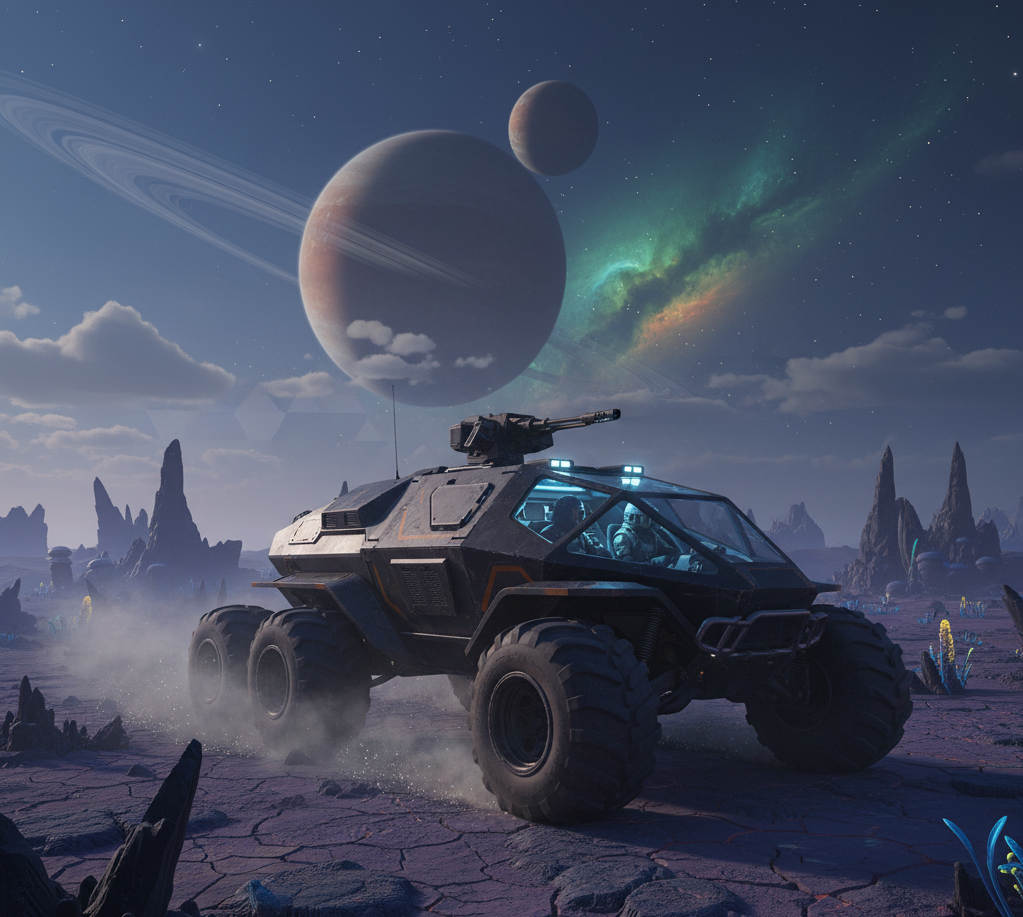
The REV-8 Vehicle Update (March 2025) brought land vehicles to Starfield’s planets. Yeah, you read that right. After spending hundreds of hours walking across barren landscapes at a snail’s pace, we finally got wheels. Or tracks. Or whatever anti-grav propulsion system these things use.
The Stellar Cartography Update (June 2025) completely overhauled space exploration, adding handcrafted locations to previously barren planets, new points of interest, and a reason to actually explore beyond marked quest locations.
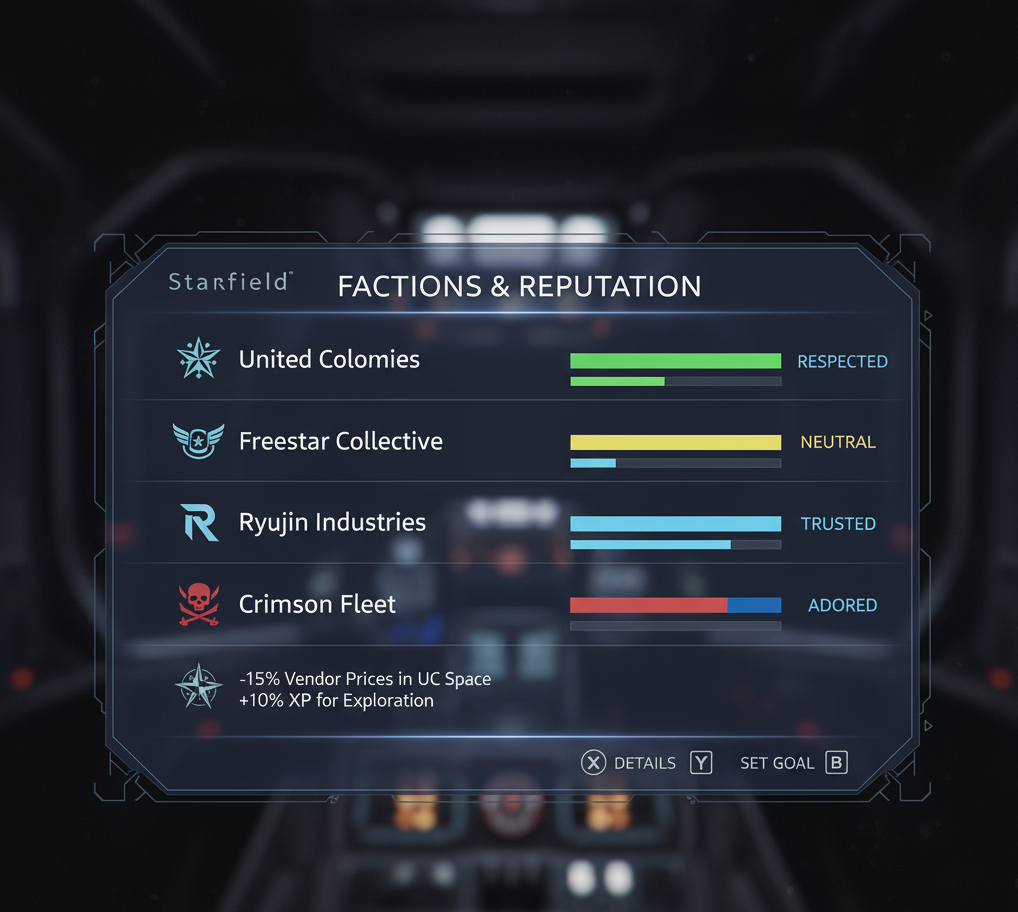
The Faction Expansion (September 2025) introduced new questlines for Crimson Fleet, Freestar Collective, and United Colonies, plus reputation consequences that actually matter. Your choices now have weight beyond a single questline.
And that’s not even counting the quality-of-life improvements, performance optimizations, and Creation Kit enhancements that modders have been exploiting to create incredible content.
Exploration Finally Feels Worth It
Land Vehicles: The Game-Changer We Needed
Let’s talk about the REV-8. This thing transformed exploration from a tedious chore into actual fun. You can customize it with different modules (cargo storage, weapon mounts, boost systems), and driving across alien terrain at high speed while blasting hostile fauna never gets old.
Here’s what makes vehicles work:
- Speed: Traverse vast distances 5-6 times faster than walking
- Combat Capable: Mount weapons to handle threats on the move
- Cargo Space: Additional storage means longer exploration trips
- Planetary Scanning: Use onboard sensors while driving
- Customization: Modify appearance and functionality at outposts
The physics are arcade-style rather than realistic, which is perfect. This isn’t a driving simulator. You want to launch off sand dunes and stick the landing? Go for it. The vehicles feel responsive and fun without being overly complex.
One quirk: you can’t summon your vehicle everywhere. You need relatively flat terrain, which makes sense but occasionally frustrates when you’re stuck in mountainous regions. Still, it’s such a massive improvement that I can’t imagine playing without it now.
New Points of Interest Actually Matter
Remember how every planet felt like a procedurally generated wasteland with copy-paste outposts? The Stellar Cartography Update addressed this with hundreds of new handcrafted locations. We’re talking about:
- Abandoned research facilities with environmental storytelling
- Crashed ships with unique loot and backstories
- Alien ruins that hint at pre-human civilizations
- Hidden settlements with NPCs and side quests
- Dangerous dungeons requiring puzzle-solving and combat
These aren’t marked on your map automatically. You actually have to explore and discover them, which creates genuine moments of excitement when you stumble upon something unexpected. That’s the exploration loop Starfield should have launched with.
Combat and Gameplay Improvements
Gunplay Gets an Overhaul
The 2025 updates refined the shooting mechanics considerably. Weapon handling feels tighter, hit registration is more consistent, and enemy AI received significant improvements. Enemies now flank, use cover intelligently, and employ varied tactics based on their faction.
What’s Better:
| Improvement | Impact |
|---|---|
| Weapon Balance | All weapon types viable now (no more ballistic dominance) |
| Enemy Variety | New creature types and hostile factions |
| Cover System | Actually works as intended |
| Grenade Physics | Predictable trajectories and blast radius |
| Melee Viability | Close combat builds finally effective |
They also added weapon mods that meaningfully change how guns function. A scope isn’t just a zoom anymore. It might highlight enemy weak points or provide thermal vision. Underbarrel attachments can switch your rifle between automatic and shotgun modes. The customization depth rivals modern shooters now.
Space Combat Still Needs Work
I wish I could tell you space combat received the same attention as ground combat, but it remains the weakest aspect of Starfield. The 2025 updates added new ship modules and slightly improved targeting, but dogfights still feel floaty and disconnected.
You can customize ships more extensively now, with better visual feedback for damage and improved power management. But fundamentally, space combat lacks the intensity and excitement it should have. This is one area where Bethesda still has work to do.
Faction Questlines and Narrative Depth
New Storylines Worth Playing
The Faction Expansion brought meaty new content to all major factions. Each received 10-15 hours of additional quests that flesh out their ideologies and internal conflicts.
Crimson Fleet: A storyline about succession and loyalty when the old guard dies. You’ll navigate pirate politics and choose the fleet’s future direction. It’s morally gray in all the right ways.
Freestar Collective: Focuses on frontier justice versus corporate interests. A murder mystery spirals into uncovering corruption at the highest levels. Think space western with serious consequences.
United Colonies: Deals with xenophobic elements within the UC using Terromorph incidents as justification for expansion. You’ll question whether security justifies authoritarian measures.
What makes these questlines special is they’re not isolated stories. Your actions ripple through the game world. Side with corporate interests in one quest, and you’ll face consequences in settlements that relied on independent traders. Help the UC crack down on smuggling, and Crimson Fleet becomes hostile.
Reputation System Actually Works
The updated reputation system tracks your standing with every major faction and minor settlement. It’s not just a hidden number anymore. NPCs comment on your reputation, vendors adjust prices, and guards might look the other way (or come after you) based on your history.
You can be simultaneously loved by one faction and hunted by another, creating interesting roleplaying opportunities. My current playthrough has me as a respected Freestar Ranger who’s secretly feeding intel to Crimson Fleet. The tension when both factions are in the same room is palpable.
Performance and Technical Improvements
Console and PC Optimization
Bethesda finally addressed the elephant in the room: performance. The 2025 updates brought significant optimization across all platforms.
Xbox Series X/S:
- Series X: Stable 60fps in performance mode (1440p-1800p dynamic)
- Quality mode: 4K/30fps with improved lighting
- Series S: Locked 30fps at 1080p with reduced crowds
- Load times cut by 40% compared to launch
PC Performance:
- Better GPU utilization (Nvidia and AMD)
- Reduced CPU bottlenecks in cities
- DLSS 3.5 support with ray reconstruction
- FSR 3.0 for AMD users
- Improved shader compilation (fewer stutters)
I’m running a mid-range PC (RTX 4070, Ryzen 7 5800X) and now get a consistent 70-90fps at 1440p with high settings. At launch, I struggled to maintain 60fps with frequent drops. The difference is night and day.
Bugs still exist. This is a Bethesda game, after all. But the game-breaking issues are mostly squashed. I encountered only one serious bug in 30 hours (a quest NPC falling through the floor), and reloading fixed it immediately.
Quality of Life: The Little Things That Matter
Interface and Inventory Management
The UI received a complete overhaul based on community feedback. Inventory management is no longer a nightmare:
- Sort by weight, value, damage, or custom categories
- Mark items as favorites for quick access
- Filter by weapon/armor type without endless scrolling
- Ship cargo accessible from any major settlement
- Companion inventory expanded with better organization
The star map got a makeover too. You can now filter systems by resources, unexplored status, mission markers, or custom tags. Finding that one planet with Helium-3 deposits doesn’t require checking dozens of systems manually anymore.
Outpost building received attention as well. Snap points work correctly, the interface explains resource chains clearly, and you can now blueprint entire outpost layouts to replicate on other planets. Building a network of resource-gathering bases actually feels feasible now.
Companion Improvements
Companions are less annoying, which sounds like faint praise but is actually huge. They no longer block doorways constantly, have better combat AI, and their affinity conversations trigger more organically.
Sarah Morgan still judges your life choices, but at least she’s tactically competent now. Andreja stops standing directly in front of your sniper scope. Sam Coe’s daughter Cora got new dialogue that makes her feel less like a walking reminder system.
You can also customize companion gear more extensively. Seeing your crew in matching armor sets or specialized loadouts adds personality to your ship.
Modding Scene: The Community’s Contribution
Creation Kit Opens the Floodgates
Bethesda released the Creation Kit in late 2024, and the modding community went absolutely wild throughout 2025. The quantity and quality of mods available now rival Skyrim and Fallout 4.
Essential Mods to Check Out:
- Starborn Overhaul: Makes New Game Plus actually compelling with branching storylines
- Enhanced Planetary Exploration: Adds hundreds of unique POIs to procedural planets
- Ship Combat Rebalanced: Fixes the floaty space combat Bethesda hasn’t addressed
- Faction Warfare: Dynamic conflicts between factions create living world
- Survival Overhaul: Hardcore mode with hunger, thirst, oxygen management
The beauty of Starfield modding in 2025 is stability. Most major mods work together without conflicts, and the community has established best practices for load orders. Even mod novices can install 50-100 mods without breaking their game.
Console players on Xbox got access to mods too, though obviously more limited than PC. Still, you can transform the experience with graphics enhancements, gameplay tweaks, and new content without touching a single line of code.
What Still Needs Work
Persistent Issues
Despite all the improvements, Starfield isn’t perfect. Some launch criticisms remain valid:
Procedural Planets Still Feel Empty: While new POIs help, vast stretches of planets remain barren. The vehicle mitigates this but doesn’t solve it. You’ll still spend time crossing featureless terrain.
Loading Screens Everywhere: The immersion-breaking loading screens persist. Entering buildings, fast traveling, docking with ships… all require loads. It’s jarring in 2025 when other games offer seamless transitions.
Limited Role-Playing Consequences: Despite reputation improvements, your choices don’t dramatically alter the main storyline. You’re still funneled toward similar outcomes regardless of how you played.
Companion Romance Feels Shallow: The romance options lack depth compared to other Bethesda games or modern RPGs. Conversations feel surface-level, and relationships develop through simple approval mechanics.
Space Exploration vs. Reality: You still can’t manually fly between planets or land anywhere seamlessly. The game sells exploration but confines you to fast travel between predetermined landing zones.
New Player Experience vs. Returning Players
Should You Start Fresh or Continue?
If you finished Starfield at launch and shelved it, here’s my advice: start a new game. The pacing improvements, tutorial refinements, and early-game changes make the opening hours significantly better. Plus, you’ll naturally encounter new content woven into the existing structure.
For new players jumping in for the first time, you’re getting the definitive version of Starfield. The game Bethesda should have launched. You won’t experience the frustration of pre-patch issues or missing features that plagued early adopters.
Starting Tips for 2025:
- Invest in piloting skills early (ship combat is unavoidable)
- Get the REV-8 vehicle ASAP (side quest unlocks it)
- Join a faction immediately (don’t wait like I did)
- Ignore the main quest for 10-15 hours (explore freely first)
- Experiment with outposts (they’re actually useful now)
The New Game Plus system received updates too. Multiple playthroughs now offer meaningful variations instead of just stat increases and slightly different dialogue. The Starborn path has branching options that create genuinely different experiences.
DLC and Future Content
Shattered Space and Beyond
The Shattered Space expansion launched in late 2024 and received its own updates throughout 2025. If you haven’t played it, this self-contained story about House Va’ruun offers:
- A handcrafted planet with no procedural generation
- 20+ hours of horror-tinged narrative
- New mechanics involving gravity manipulation
- Faction choices with permanent consequences
- Genuinely unsettling atmosphere (rare for Bethesda)
It’s the best content in Starfield, period. The focused design and lack of procedural padding showcase what Bethesda does best: environmental storytelling and interconnected quests.
Bethesda teased additional expansions for late 2025 and 2026. Rumors suggest a Crimson Fleet-focused story and something involving the Terrormorphs’ origins. Nothing confirmed, but the post-launch support has been consistent enough to trust they’re committed long-term.
The Verdict: Is Starfield Worth Playing in 2025?
After extensive time with all the 2025 updates, here’s my honest take:
You should play Starfield in 2025 if:
- You love Bethesda RPGs and gave up at launch (it’s fixed)
- Space exploration and base building appeal to you
- You enjoy modding and customization
- You’re patient with slower-paced RPGs
- You skipped it entirely and want a polished experience
You should still skip if:
- Fast-paced action is your priority (this is methodical)
- Loading screens break immersion for you (still present)
- You need tight, focused narratives (it’s sprawling and meandering)
- You hated Fallout 4 and Skyrim’s design philosophy
- Procedural generation bothers you fundamentally
Starfield in 2025 is what the game should have been at launch. It’s not a revolutionary space sim or the second coming of New Vegas. It’s a quintessential Bethesda RPG in space, with all the strengths and weaknesses that entails. But now the strengths significantly outweigh the weaknesses.
Conclusion
The Starfield 2025 update transformed a flawed but ambitious game into a genuinely great RPG experience. Bethesda listened to feedback, addressed major criticisms, and added substantial content that respects players’ time and intelligence.
Is it perfect? No. The fundamental design decisions that divided people at launch remain. If you fundamentally dislike Bethesda’s design philosophy, these updates won’t convert you. But if you were on the fence, waiting for the game to reach its potential, that moment has arrived.
The addition of land vehicles alone justifies jumping back in. Combine that with improved exploration, meaningful faction content, and a year of community mods, and you’ve got hundreds of hours of quality space RPG gameplay.
For those who never tried Starfield, you’re getting the definitive version. Skip the discourse about launch issues and experience the game Bethesda spent two years refining. It’s not the revolutionary title some hoped for, but it’s a damn good time in the Settled Systems.
Have you returned to Starfield after the 2025 updates, or are you considering picking it up for the first time? What features would convince you to try it or jump back in? Drop your thoughts below. I’m curious whether the vehicles alone are enough to bring people back or if you’re waiting for something more.
FAQ: Starfield 2025 Update Questions
Is Starfield better in 2025 than at launch?
Absolutely. The 2025 updates addressed most launch criticisms with land vehicles, improved exploration, enhanced performance, better faction questlines, and countless quality-of-life improvements. The game feels complete now, with meaningful content additions rather than just bug fixes. New players are experiencing a dramatically better version than early adopters.
Do I need to buy DLC to enjoy the 2025 updates?
No. All major updates (vehicles, exploration improvements, performance patches, UI overhauls) are free to all Starfield owners. The Shattered Space DLC is optional and offers 20+ hours of additional story content, but the base game received substantial free improvements regardless of DLC ownership.
Can I continue my old save file with the new updates?
Yes, existing save files are compatible with all 2025 updates. However, starting fresh is recommended to experience pacing improvements and tutorial refinements. If continuing an old save, you’ll still access new faction quests, vehicles, and points of interest through normal gameplay progression.
How much does Starfield cost in 2025?
Starfield regularly goes on sale for $40-50 (down from the $70 launch price). The Premium Edition with Shattered Space DLC costs around $80-90. Check Steam, Xbox Store, or physical retailers for seasonal sales. Game Pass subscribers can play the base game at no additional cost.
What are the system requirements for Starfield in 2025?
PC requirements remain similar to launch, but optimization means better performance on the same hardware. Minimum: GTX 1070 Ti or RX 5700, 16GB RAM, SSD required. Recommended for 60fps at 1440p: RTX 3070/RX 6800 XT, 32GB RAM. The game runs significantly better on mid-range systems after 2025 patches.
Sources & Additional Resources
- Bethesda Official Website – Starfield Updates and Patch Notes – Official update information and upcoming content announcements
- Digital Foundry – Technical analysis of performance improvements across PC, Xbox Series X, and Series S platforms
- Nexus Mods Starfield – Community-created content and essential mods that enhance the 2025 experience